
Wholesale on Amazon means buying established brands from a manufacturer or distributor and reselling them, usually through FBA. The work is sourcing, margins, approvals and account health, not product development. Outside help for that model is a different thing from help for a private label brand, and this guide is about choosing it well.
It is written for a reseller already doing wholesale volume who is deciding whether to hand the account to someone, and how to tell a good provider from a bad one. Amazon’s own rules on wholesale sourcing and brand approvals were checked for this update; if you are still setting up, start with what Seller Central is.
What does a wholesale FBA provider do?
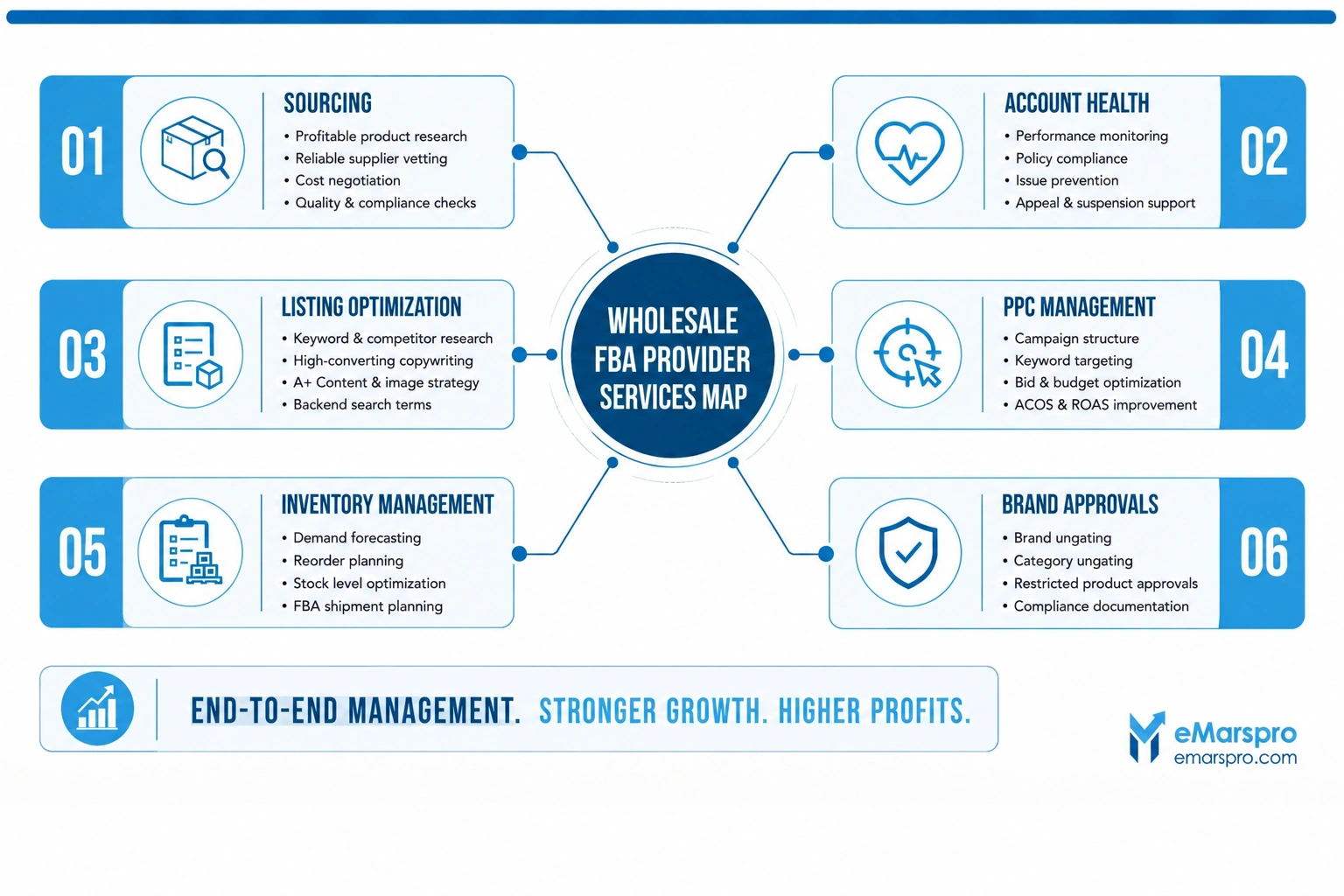
The model sets the work. Because you are reselling someone else’s brand, the provider’s job is the account around the products: the approvals that let you list, the margin after every fee, and the health metrics that keep the account open. Our Amazon FBA management service covers the same ground.
| Area | What the work is |
|---|---|
| Sourcing checks | Verifying a supplier’s business license and brand authorization before money moves; Amazon’s wholesale guide names both |
| Brand and category approvals | The Selling application for Brand, with the invoice or authorization letter Amazon requires |
| Account health | Order defect rate, late shipments, cancellations, and the notices that arrive between them |
| Listings | Matching offers to the right existing pages; a wrong match inherits a page you cannot edit |
| Advertising | Sponsored Products on the SKUs with margin, paused on the ones without |
| Inventory and fees | Weeks of cover per SKU, FBA fee audits, reimbursements for lost and damaged stock |
Do you need one? An honest answer
Many wholesale sellers do not, yet. While one person can run the weekly routine, keep it in-house.
The signals that it has stopped fitting are specific: margins that shrink after fees with no price change on your side; the Buy Box lost on top SKUs; brand approvals bouncing; health warnings arriving faster than they are cleared; sourcing eating the hours the account needs.
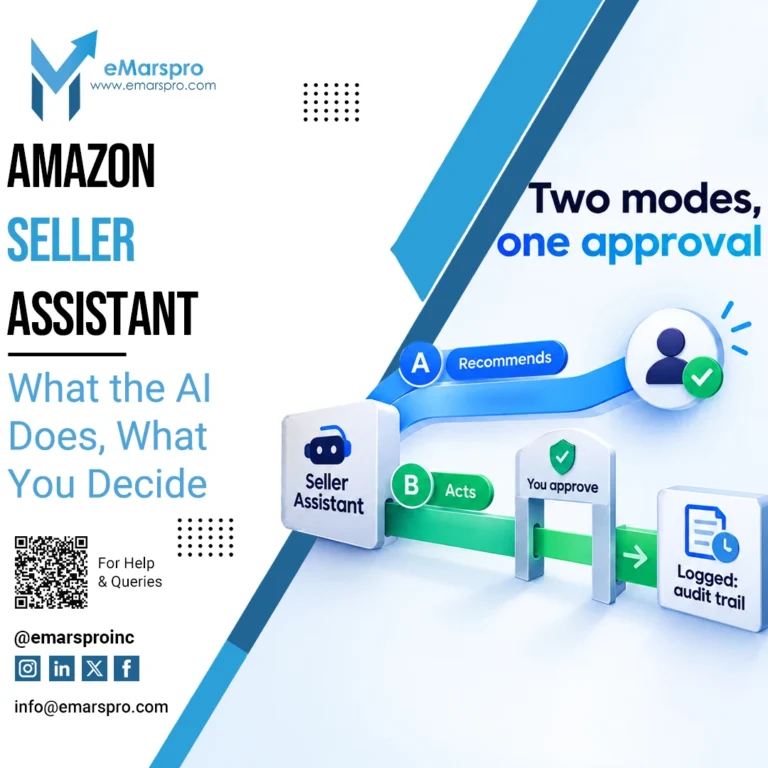
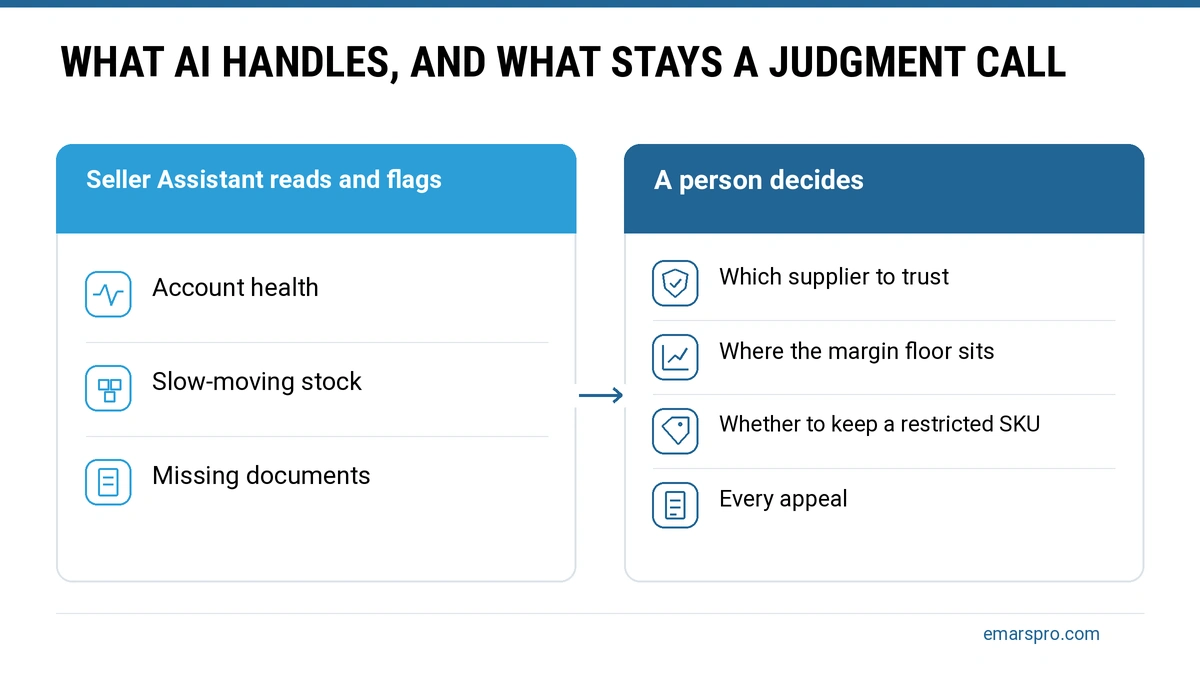
Seller Assistant, Amazon’s AI expert inside Seller Central, now handles the routine questions (account health, slow stock, missing documents). What it cannot do is decide which supplier to trust or where the margin floor sits. Those judgment calls are what you are buying when you bring in help.
What Amazon expects from a wholesale seller
The provider you choose will live inside these rules, so know them first. Amazon’s wholesale guide says a branded product should come from the brand, a direct distributor or a wholesaler, and that you should review the supplier’s business license and brand authorization letter before buying. Retail-to-retail dropshipping is prohibited, and liquidation is not a valid source of supply.
For brand approvals, Amazon’s branded products guide describes the Selling application for Brand: a purchase invoice from a manufacturer or distributor, or a brand authorization letter dated within 180 days on the brand’s letterhead, with your name and address matching the account. Amazon says confirmation usually arrives within 24 hours and the review usually completes within three business days.
Amazon’s invoice checklist adds the details a reviewer looks for: supplier name and address, an itemized product list, a date within the last 180 days, your name and address matching the account, and a combined purchase of at least 10 units.
Seven things to look for
- Wholesale experience specifically: ask for accounts that resell other brands, not private label case studies dressed up.
- A brand-approval track record: how many applications they filed last quarter, and how many were approved first time.
- Operator-level answers: a provider who can explain a fee line or an approval rejection from memory has done the work.
- Reporting you can read: the cadence set in your SOW, usually weekly or biweekly, with the numbers that matter for wholesale (margin after fees, weeks of cover, health metrics).
- A written scope: what they do, what they do not, and who approves what. Vague scope is where disputes start.
- Team depth: who covers the account when the lead person is out, and whether the after-hours warning gets read.
- References you can call: two sellers in the wholesale model, not testimonials on a page.
Ten questions to ask before you sign
- How many wholesale accounts do you run today, and for how long on average?
- Walk me through one brand approval you handled from application to approval.
- What would you check first in my account, and why?
- What is in the weekly report, and who writes it?
- How is pricing structured, and what changes it?
- Who works on my account day to day, and who do I call?
- What happens when an account health warning lands at 9pm on a Friday?
- When would you tell me wholesale is the wrong model for a product?
- What is your timeline for the first visible change, and what counts as a result?
- Who can I call who has worked with you for more than a year?
Weak candidates stumble on questions 3, 7 and 9, because those need a real account to answer. Listen for specifics, not confidence.
Red flags that cost sellers money
- Promised results. Amazon decides approvals and the Buy Box; nobody can promise either.
- No distinction between wholesale and private label in how they describe the work.
- Price as the whole pitch, with no view on margin after FBA fees.
- No reporting commitment in writing.
- Pressure to sign quickly, or a contract with no exit.

What AI handles, and what stays a judgment call
Seller Assistant is Amazon’s agentic AI expert inside Seller Central. Per Amazon’s September 2025 announcement it can answer account health questions with recommended actions, flag slow-moving stock before long-term storage fees, and check compliance documents, Amazon’s example being a missing UL certification on an electronics listing.
Amazon states it takes action only with the seller’s permission, and since September 2026 it can run workflows you describe and approve.
What a person still decides in a wholesale account: which supplier to trust, where the margin floor sits, whether to keep a SKU a brand has restricted, and every appeal.
In our accounts the assistant reads and flags; the account manager approves each listing change, each appeal and each bid change past a set limit. The same split should be written into any provider’s scope.
Two tools worth asking any provider about: which inventory management software they run the weeks-of-cover model in, and what their daily, weekly and monthly routine looks like on paper, because a provider without a routine is a provider who reacts.
Frequently Asked Questions
Six jobs: supplier and margin checks, brand and category approvals, account health, listing matches, advertising, and inventory and fee control. The seller keeps sourcing decisions and the supplier relationships; the provider runs the account around them.
Not while one person can run the weekly routine. The signals that it has stopped fitting: margins shrinking after fees, lost Buy Box on top SKUs, approvals bouncing, account health warnings, or sourcing eating the time the account needs.
Per Amazon’s guides: a purchase invoice from a manufacturer or distributor, or a brand authorization letter dated within 180 days, with your name and address matching the selling account. Amazon usually confirms within 24 hours and usually completes the review within three business days.
It can monitor and draft. Seller Assistant flags account health issues, slow stock and compliance gaps, and Amazon states it acts only with the seller’s approval. Supplier choice, margin floors and what to do when a brand says no are still judgment calls a person makes.
Choosing Not To Choose Alone
A good provider makes the account boring: approvals filed on time, margin visible after fees, health metrics green, stock arriving before it runs out. If that is not what your account looks like today, our wholesale FBA management team starts with a free 48-hour audit of the fee lines, the approvals and the stock position before anything else.