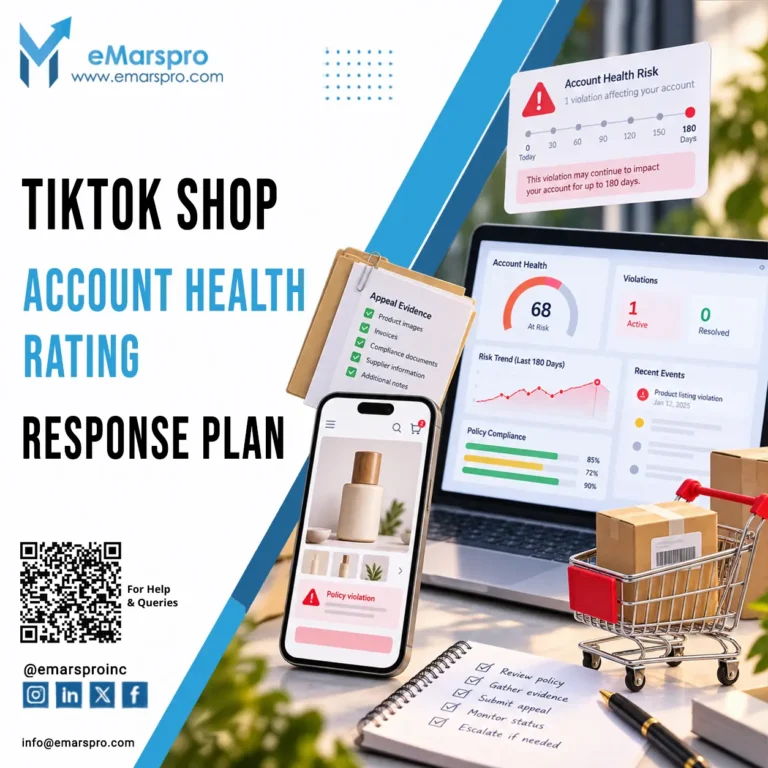
TikTok Shop Account Health Rating is a shop-level compliance signal. When a violation arrives, the operating
question is not only what happened. It is who owns the response, what evidence is needed, and whether a
correction, appeal, or quiz action is available before the deadline.
TikTok Shop states that Account Health Rating reflects points earned and lost over the previous 180 days.
Treat that score as a working control for risk, not as a dashboard to revisit after a problem has already become urgent.
What TikTok Shop Account Health Rating Measures
Account Health Rating, often called AHR, gives sellers a view of their shop health in Seller Center.
TikTok Shop uses a 0 to 1,000 point scale and describes it as a measure of shop activities over the last 180 days.
The useful management distinction is simple. AHR brings policy compliance and performance issues into one risk
view. A violation therefore deserves the same operating discipline as a disruption in catalog, fulfillment, or customer support.
TikTok Shop publishes its current AHR framework in Account Health Rating requirements. Check that source
whenever your team needs the current policy language or threshold details.
TikTok Shop Account Health Rating vs Shop Performance Score
Do not use Account Health Rating and Shop Performance Score as interchangeable labels. AHR is the compliance
and enforcement lens. Shop Performance Score is the operating performance lens. A brand can have work to do in either view, and the response owner may be different.
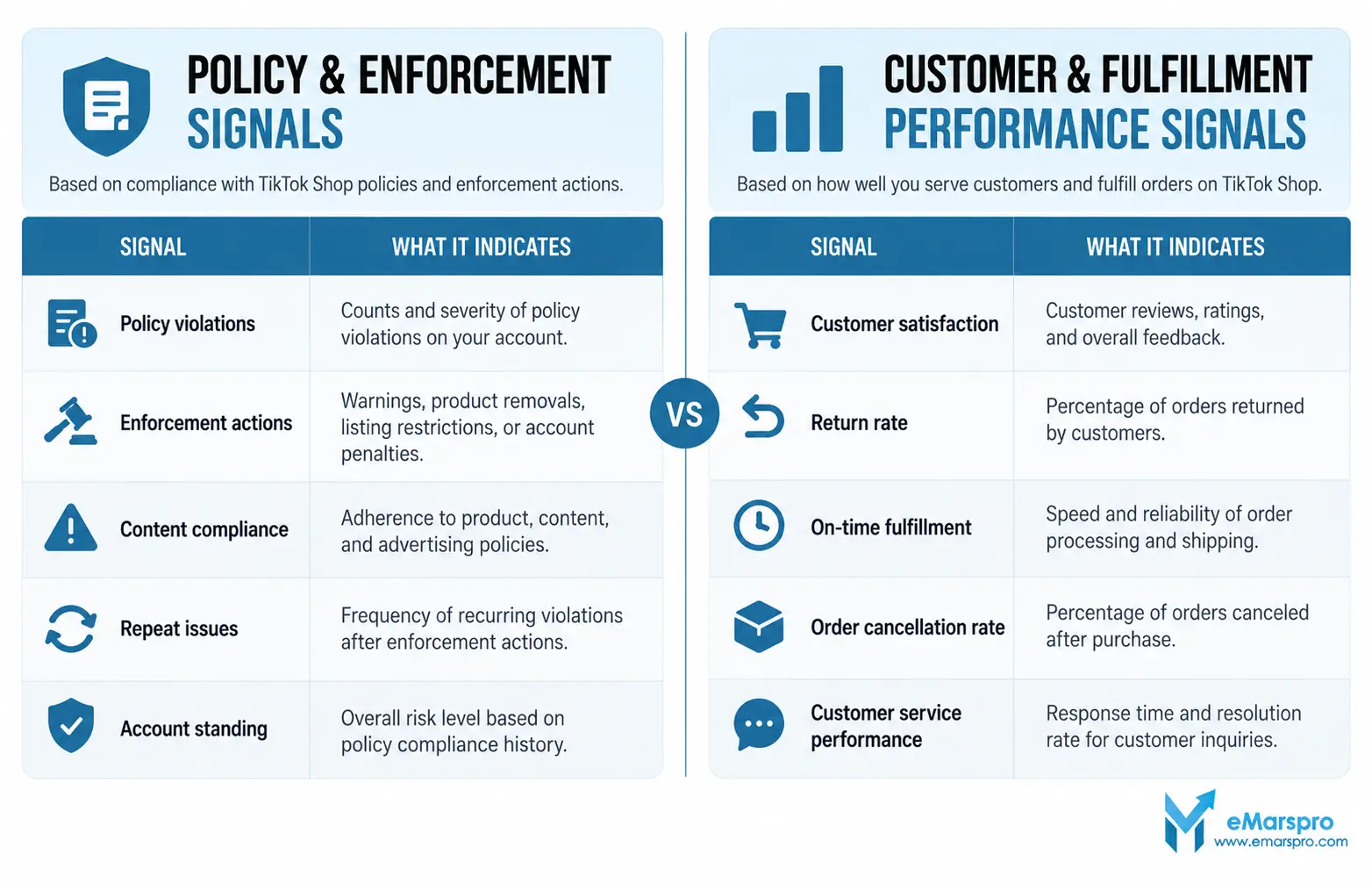
For a weekly review, keep them in separate lines. Use AHR to identify active policy or enforcement exposure.
Use the performance score to inspect the customer, product, and fulfillment signals that need operational attention. This prevents a compliance issue from being hidden inside a broad performance discussion.
What to Do When a TikTok Shop Violation Appears
Start in Seller Center, not in the email alone. Open the violation details, identify the affected asset or process,
and check the response options and deadline shown for that case.
Then create one short case record. It should name the violation category, affected listing or workflow,
decision owner, evidence required, deadline, and the next action. The record turns a notification into a controlled operating task.
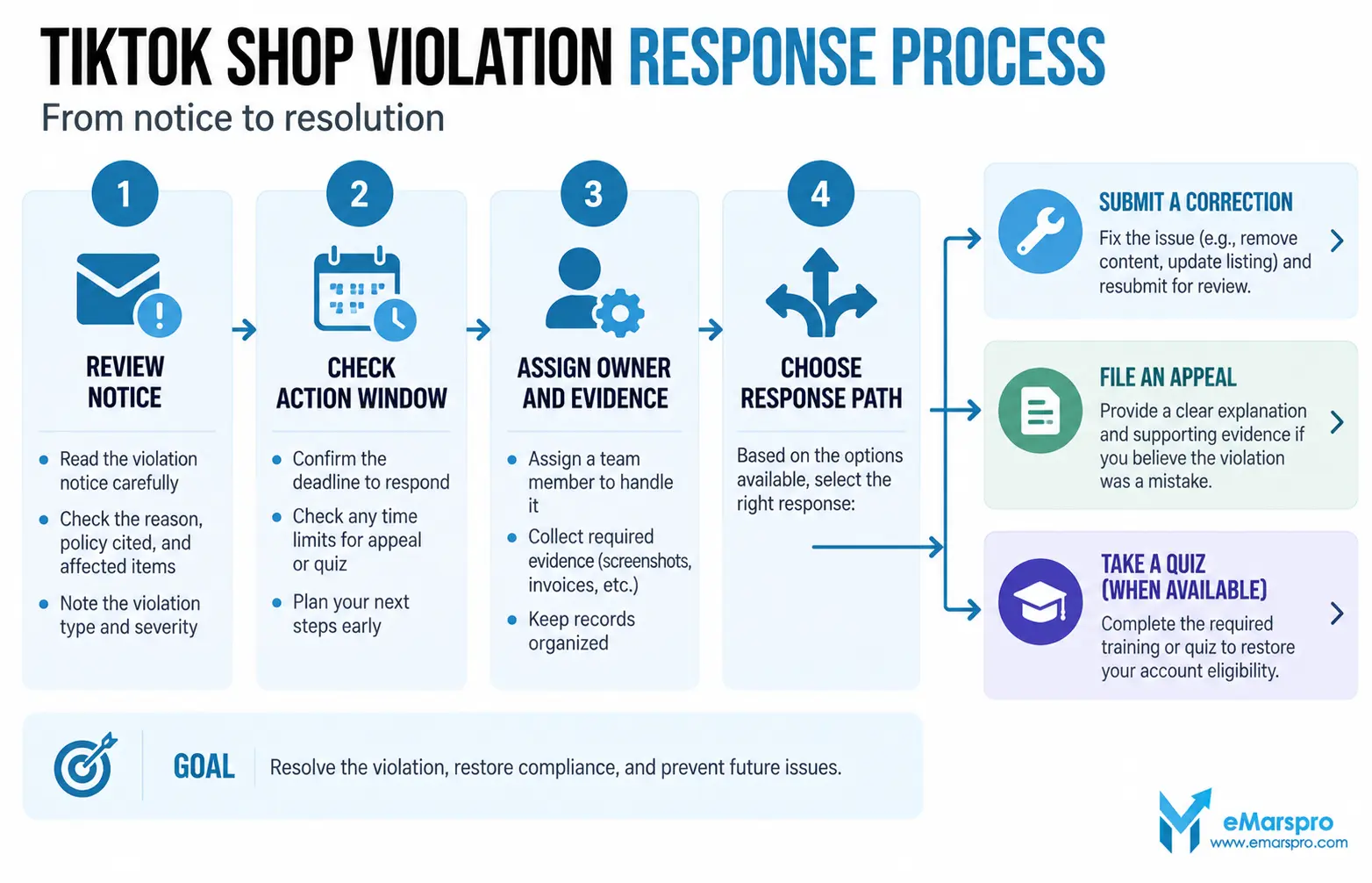
TikTok Shop directs sellers to review the available action on the Account Health Rating page after a notice,
including whether they can correct, appeal, or take a quiz. The available path depends on the case, so do not
assume that every notice has the same remedy.
Use TikTok Shop’s official violation guidance to confirm the current steps and notification process.
Build Response Ownership Around Active Violations
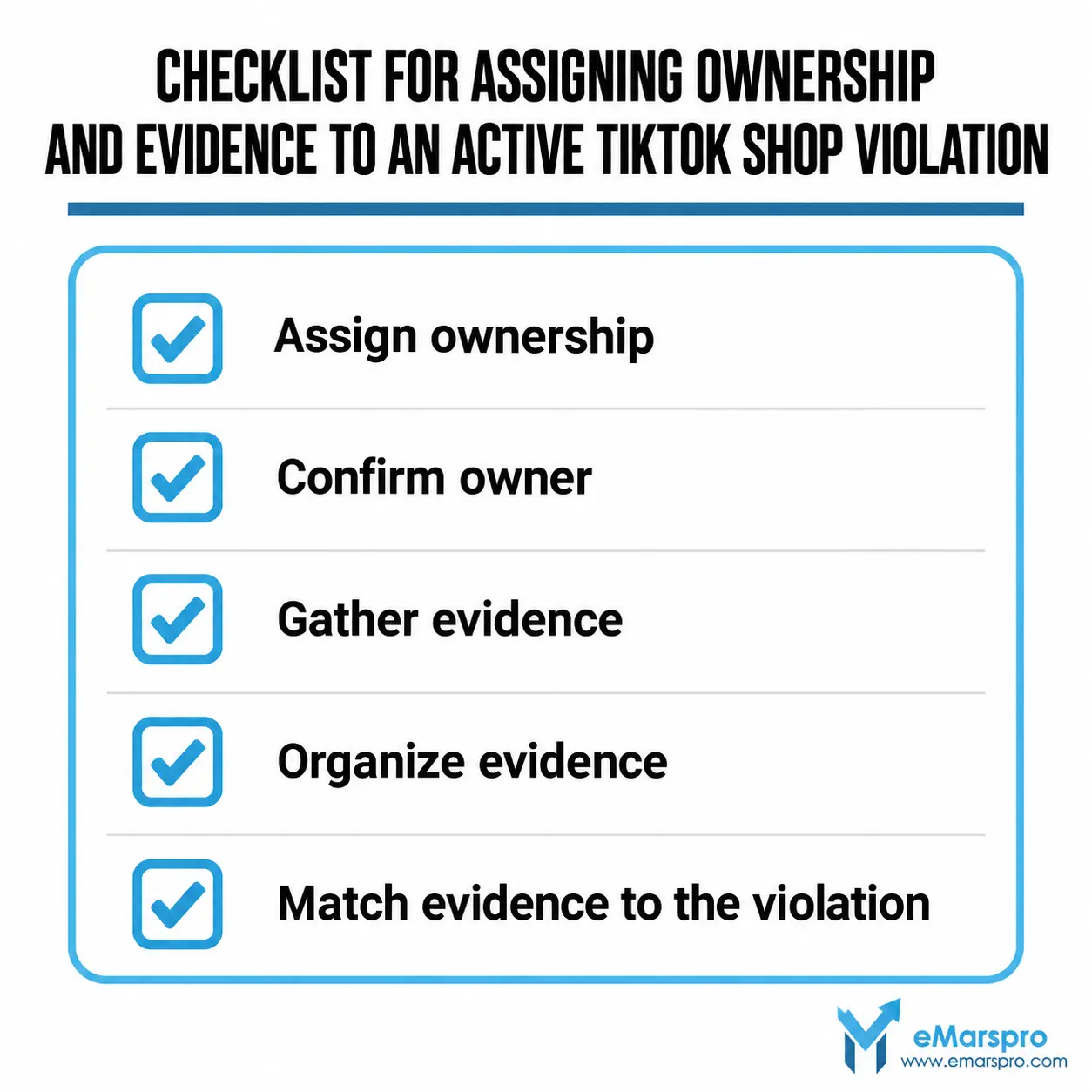
The person who sees the alert should not have to reconstruct the response from scratch. Assign a primary
owner before the alert arrives, then define who supplies listing evidence, who reviews content, and who confirms that the action was submitted.
- Owner: the person accountable for the case decision and submission.
- Affected area: the listing, order flow, product evidence, content, or account process involved.
- Evidence: the files, images, documents, or internal record needed for the selected action.
- Deadline: the exact time available in Seller Center, not a team-assumed timetable.
- Recurring cause: the rule, workflow, or content pattern that should be corrected after the case closes.
This is an operator workflow, not a client case study or performance claim. No approved case example was
available for this article, so the guidance stays at the workflow level.
Where policy tasks cross listing, order, and content workflows, connect the case record to the broader eCommerce account management operating review rather than treating it as an isolated alert.
Use Correction Appeal and Quiz Options Before Deadlines Close
A correction is appropriate only when the platform offers it and the underlying issue can be fixed accurately.
An appeal is appropriate when you believe the enforcement was issued in error and you have relevant
supporting evidence. A quiz is a recovery or learning option when the platform makes it available.
These actions do not replace prevention. They give a team a structured response path after a case appears.
The stronger operating habit is to review the most common violation categories each week and change the upstream workflow that keeps generating them.
If product-facing content or creator activity contributes to the issue, include the relevant social media marketing workflow in the root-cause review.
Build a Weekly TikTok Shop Account Health Review
A short recurring review keeps violations from disappearing into an inbox. Review open cases first, then recently
closed cases, then repeat categories. The aim is to know whether the shop is carrying unresolved risk and whether the same failure is appearing in a new form.
- Review active violations and their response deadlines.
- Confirm the owner, evidence status, and selected action for every open case.
- Compare repeated violation categories with the current listing, content, and fulfillment workflow.
- Record what changed after each resolved case so the same issue does not return unnoticed.
This review is also where Account Health Rating becomes useful to leadership. It gives the team a concise view of
policy exposure before it affects broader commercial decisions.
Frequently Asked Questions
TikTok Shop Account Health Rating is a shop-level score that reflects points earned and lost from shop activities over the previous 180 days. It helps sellers monitor compliance and performance issues that can lead to enforcement actions.
TikTok Shop states that Account Health Rating reflects shop activities over the last 180 days. Check the current Account Health Rating requirements for the latest policy details.
Open the violation details in Seller Center, identify the affected asset or process, review the available response option and deadline, then assign one owner for the next action and supporting evidence.
A seller can appeal when TikTok Shop makes an appeal option available and the seller believes the enforcement was issued in error. The case details in Seller Center identify the available action and supporting evidence requirements.
The Operating Decision
Do not wait for a lower score or a more serious notice to decide who responds. Give every active violation an owner, a deadline, a record of evidence, and a follow-up on the upstream cause.
For a wider review of the operating handoffs around your shop, visit eMarspro’s TikTok Shop agency page, then use the Book a Call option if you want to discuss your situation.