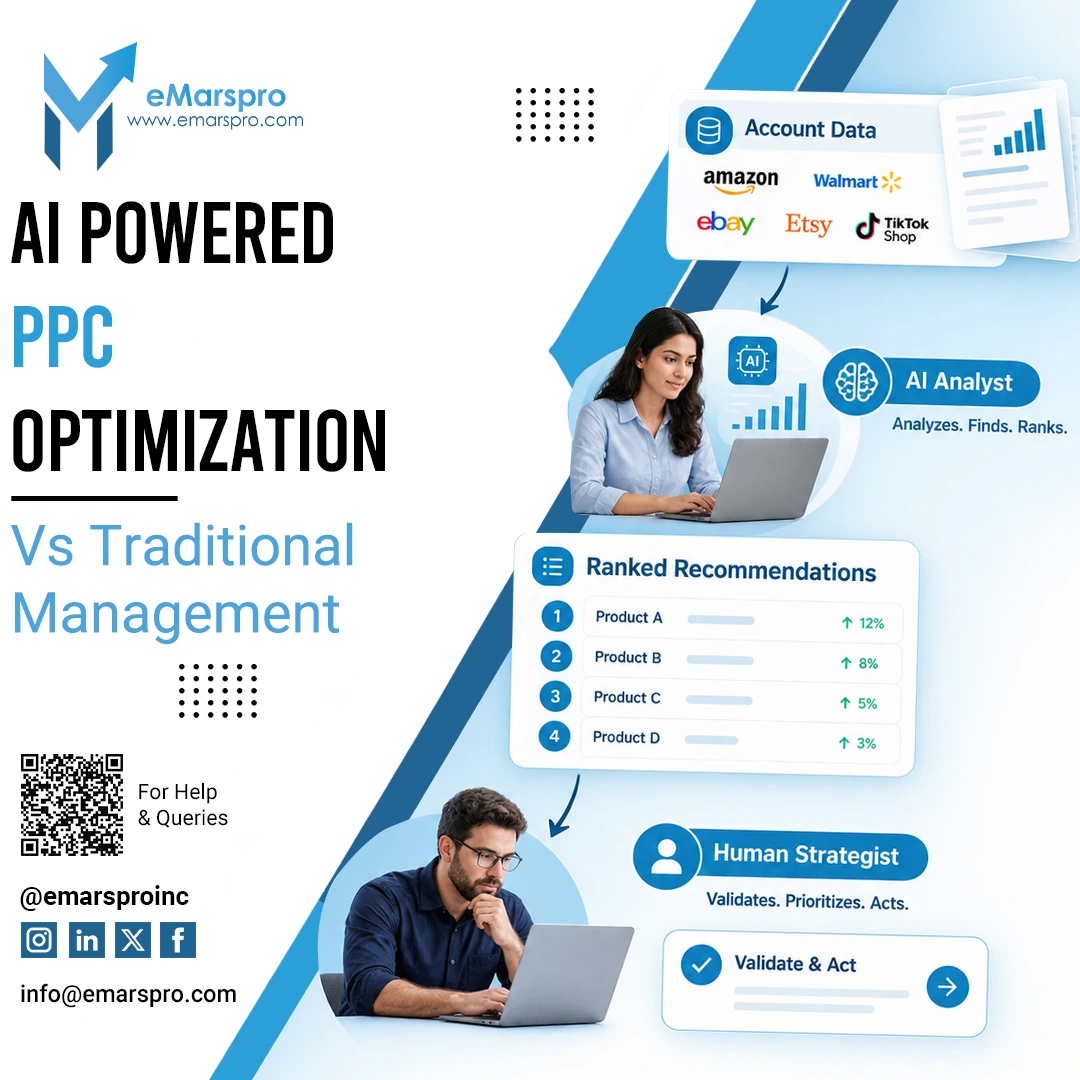


Quick answer: traditional management asks which campaigns have a good ACoS. AI-assisted management asks where the next dollar is most likely to create growth. AI reads every SKU at once and surfaces under-funded winners and waste faster than a person can. A human still weighs margin and inventory, acts, and overrules the AI when it is wrong.
The real problem was not a high ACoS
One natural-health account we manage was already efficient. At account level the advertising looked healthy, single-digit to low-teens ACoS, a strong return on ad spend. A traditional review would have said “the ads are performing, leave them alone.”
The real problem was hidden underneath that average. It was not waste. It was where the budget was going, and where it was not.
What the AI analysis found
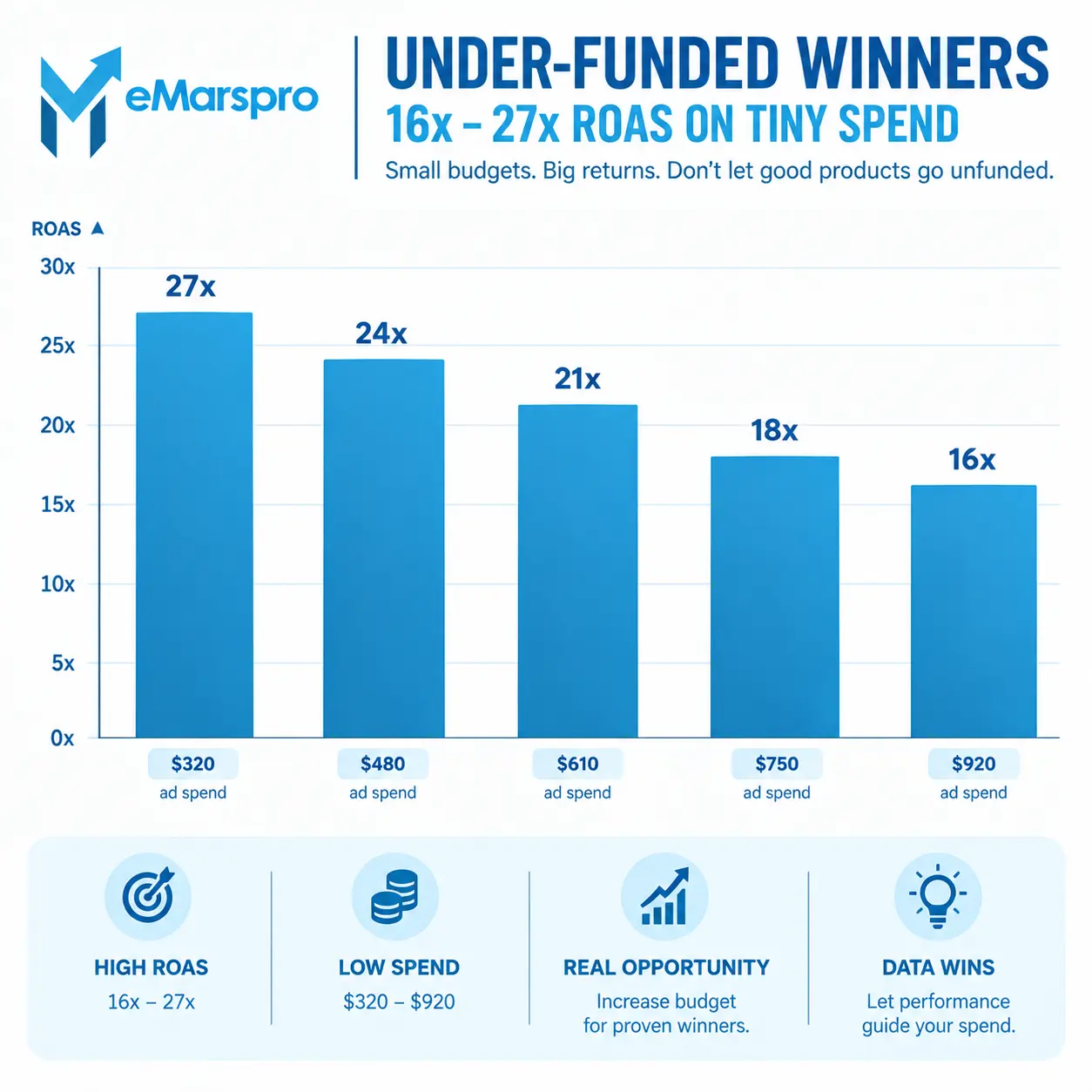
Instead of judging campaigns, the AI read performance at the SKU level, spend against ACoS, ROAS, sales, seasonality and category headroom together. It found products that were winning and starved of budget.
- A hair-colour shade returning about 27x on ad spend, running on under $100 of spend.
- Two more shades near 20x, also under-funded.
- A menopause product around 18x, flagged to triple its budget.
- A prostate product near 16x, flagged to double.
At the same time it flagged where money should stop growing, for example a seasonal product entering its off-season, with a recommendation to cut its budget and move the spend to evergreen categories.
That is the difference in one line. Traditional management asks “which campaigns have a good ACoS?” AI-assisted management asks “where is the next dollar most likely to create growth?”
The human decided, then acted
The AI did not run the account. It handed the team a prioritised list: scale these proven, under-funded winners, reduce those seasonal or weak products, reallocate toward categories with headroom, and review every two weeks.
Our managers then checked each recommendation against the things the ad data cannot see, margin after cost of goods, inventory cover, whether a listing was healthy, then implemented. That validation step is the job, because AI finds the pattern and a human still has to know whether acting on it is safe.
What happened after
The later 30-day snapshot showed the account running at about 13.6% ACoS, roughly 7.3x return on ad spend, and 5.35% total advertising cost of sales. Several of the products the AI flagged to scale, and our team agreed to scale, stayed efficient after we spent more on them.
| Product (anonymized) | Earlier ACoS | Later ACoS | Result |
|---|---|---|---|
| Hair shade 1 | 6.0% | 7.6% | Stayed highly efficient after scaling |
| Hair shade 2 | 6.6% | 7.1% | Stayed highly efficient |
| Menopause SKU | 5.6% | 6.3% | Elite efficiency held |
| Prostate SKU | 6.3% | 12.8% | Slipped but still strong |
| Blonde shade | 25.0% | 20.6% | Improved |
| Menopause-support SKU | 29.7% | 73.2% | Got worse, needed a human |
The miss matters more than the wins
That last row is the most important part of this. One product the analysis flagged to restructure did not improve when we acted. Its ACoS climbed past 70%.
AI identified the risk correctly. The fix, though, was a listing and market problem, not a bidding one, and it took a human to see that and step in. An analysis that reported only the wins would have hidden the exact case that proves you still need a person.
The audit a human had already started
On a second account, our team had already cut Sponsored Products ACoS from about 42% to 26% over a quarter through ordinary human work. We then ran that account through AI analysis, which identified roughly a fifth of the total budget sitting on terms with no attributed sales, waste the manual pass had not yet reached.
The human drove the first, large improvement. The AI found the next layer faster than a manual review would have. Neither did the whole job alone.
Why PPC math is never the whole story
On a third account, advertising was healthy and revenue had more than tripled year over year. It still missed its sales forecast, because of stockouts, Buy Box and pricing issues, and a suppressed listing.
No PPC tool fixes those. A human who says “the ACoS is fine, we lost the Buy Box” is doing the part that decides whether the account actually grows.
Traditional vs AI-assisted, side by side
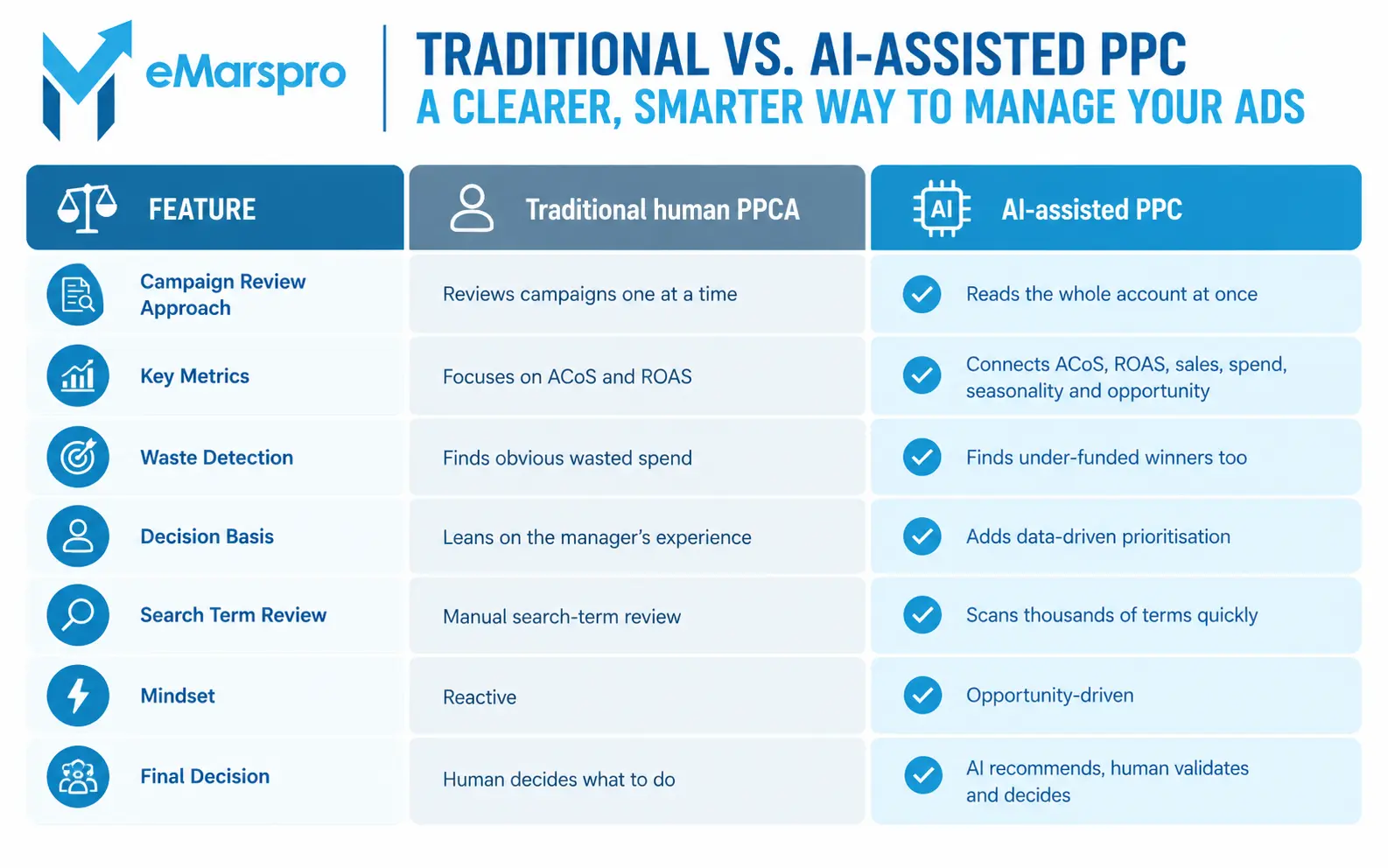
| Traditional human PPC | AI-assisted PPC |
|---|---|
| Reviews campaigns one at a time | Reads the whole account at once |
| Focuses on ACoS and ROAS | Connects ACoS, ROAS, sales, spend, seasonality and opportunity |
| Finds obvious wasted spend | Finds under-funded winners too |
| Leans on the manager’s experience | Adds data-driven prioritisation |
| Manual search-term review | Scans thousands of terms quickly |
| Reactive | Opportunity-driven |
| Human decides what to do | AI recommends, human validates and decides |
If you want AI powered PPC optimization run this way, AI to find, humans to decide and act, that is how our team works, and our AI tools for Amazon sellers guide covers the rest of the stack. For the whole account handled together, see Amazon account management.
Frequently Asked Questions
Not reliably. AI is very good at finding waste, under-funded winners and anomalies across thousands of data points. It cannot see your margin after cost of goods, your inventory cover, or whether a high ACoS is a deliberate launch. A human still has to validate the recommendation and decide when to override it.
It changes the question. Traditional management asks which campaigns have a good ACoS. AI-assisted management asks where the next advertising dollar is most likely to create growth, by reading spend, ACoS, ROAS, sales and seasonality across every SKU at once. That surfaces under-funded winners a campaign-level review misses.
Judgment and context. A human weighs margin and inventory, knows a listing is suppressed rather than under-bid, tells a launch campaign apart from a failing one, and decides whether the goal is profit or share. In our own data, one AI-flagged product got worse after action and needed a human to step in.
Both. A strong manager plus AI beats either one alone. AI becomes the analyst that finds and ranks the opportunities. The human becomes the strategist who validates them against margin and inventory, executes, and overrides when the market does not respond as expected.
Know When To Overrule The AI?
If you want AI-assisted PPC run by people who know when to overrule it, our Amazon PPC management team starts with a free 48-hour audit.