
Marketplace trends for 2027 look clearer from an operator’s desk than from a forecast: the tools that will shape next year are already in our accounts. This is not a prediction piece; it is five bets we are making with real budgets and real calendars, and the evidence behind each, checked for this update.
A bet means we are changing how we run accounts now. Where we are wrong, we will say so next October.
Bet 1: the routine work in a marketplace account moves to agents, and the seller’s job becomes the policy
Amazon described its upgraded Seller Assistant at Accelerate as a system that monitors a business continuously and acts within limits the owner sets, with every action logged. It also opened Seller Central data to outside AI tools through a plugin, starting with Amazon Quick and Anthropic’s Claude.
Our bet: by the end of 2027, most routine changes on a well-run Amazon account, restocks, price moves inside a band, bid adjustments under a cap, listing drafts, will be proposed by an agent and approved by a person. The skill that matters becomes writing the limits.
Our eCommerce management services team already runs accounts that way, with the assistant in recommend mode first and the act mode earned one task at a time.
What we are doing now: an approval policy on every account, three tiers of action sorted by what each costs to reverse. Our Seller Assistant post sets out the mechanics.
Bet 2: multichannel operations consolidate into one console, and the marketplaces compete on fulfillment
Amazon’s multichannel selling tools let a seller connect eBay, Shopify, TikTok and Walmart accounts to Seller Central, see every channel’s unshipped orders on one page and fulfill them through Amazon. Amazon says more than 95% of the independent sellers in its store already sell across multiple channels; it is now offering to run their queues.
Walmart’s answer is fulfillment. In its second-quarter results Walmart reported marketplace net sales growth of more than 50% and said nearly half of its marketplace business flowed through its fulfillment services. The marketplace that holds the inventory holds the relationship.
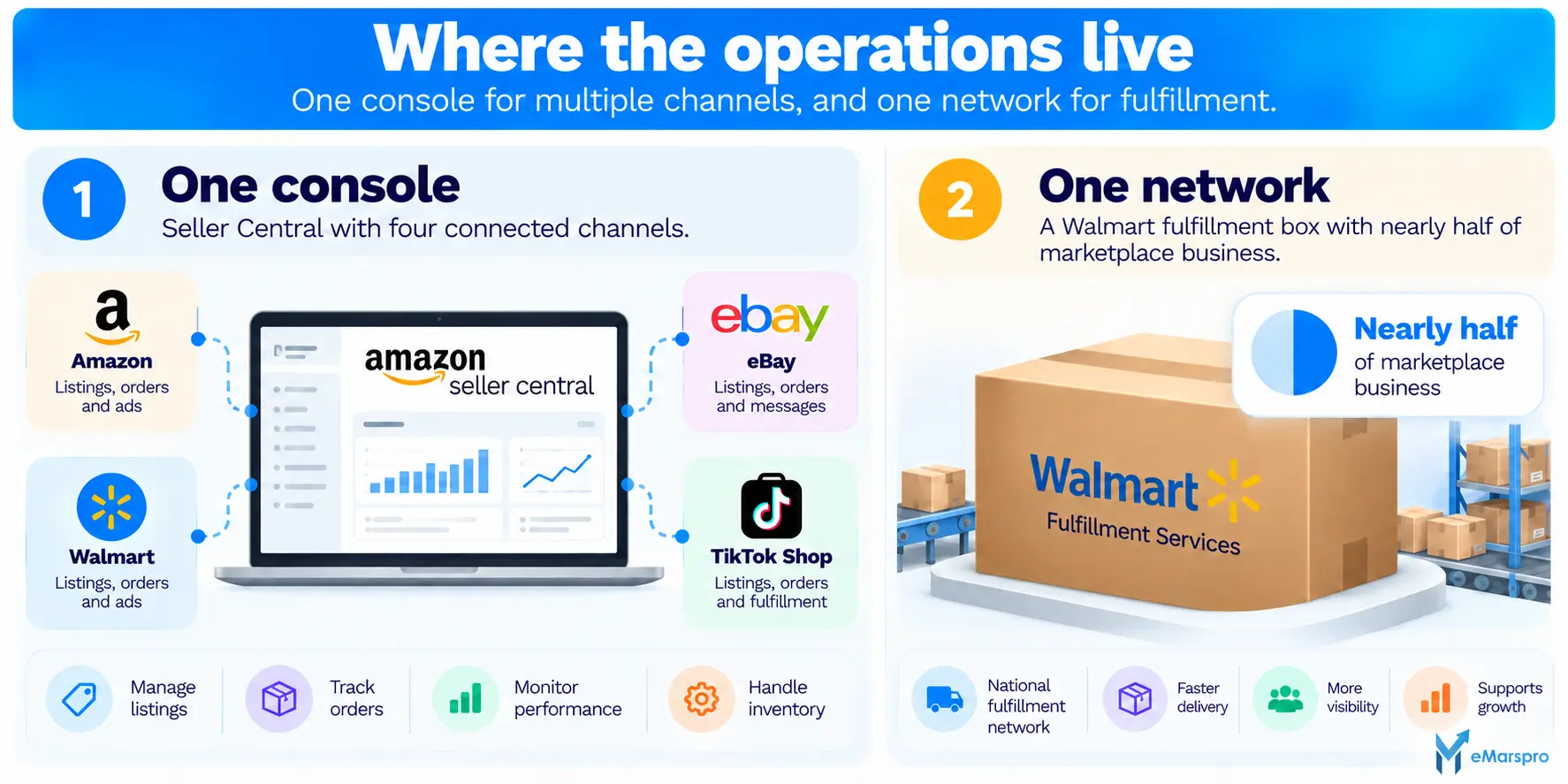
Our bet: in 2027 brands will choose where their operations live, not just where they list, and the fulfillment network will decide more account outcomes than the listing. What we are doing now: one handling-time discipline across channels, and inventory placed where the badge is earned, not where it is cheapest.
Bet 3: TikTok Shop becomes a planned channel with a budget line, not an experiment
TikTok Shop’s own holiday announcement runs its Black Friday and Cyber Monday event from November 11 to November 30, three weeks rather than a weekend, and reports that live shopping sales more than doubled in the first half of 2026 year over year. TikTok Shop also announced a 3-Day Delivery badge for products expected to arrive within three business days.
Our bet: the brands that treat TikTok Shop as a calendar item in 2027, with affiliates briefed in October and stock allocated to the event, will outsell the ones that post when they remember. What we are doing now: a TikTok Shop plan per brand that mirrors the Amazon one, run by our TikTok Shop agency team.
Bet 4: advertising becomes agentic, and the ad manager’s job becomes approvals and guardrails
Amazon Ads Agent is the new name for Amazon’s unified ad platform, combining what were the DSP and the ads console, with agentic AI that proposes campaign changes and generates creative from product pages for the advertiser to approve.
Walmart reported Walmart Connect growing 43% in the quarter, excluding VIZIO, and tools we run, such as Pacvue, now ship agents that propose changes with a change record.
Our bet: by 2027 the question “who manages the bids” is answered by software, and the question that separates accounts is “who set the ceiling, the floor and the margin”. The edge moves to first-party data and to the person reading the log.
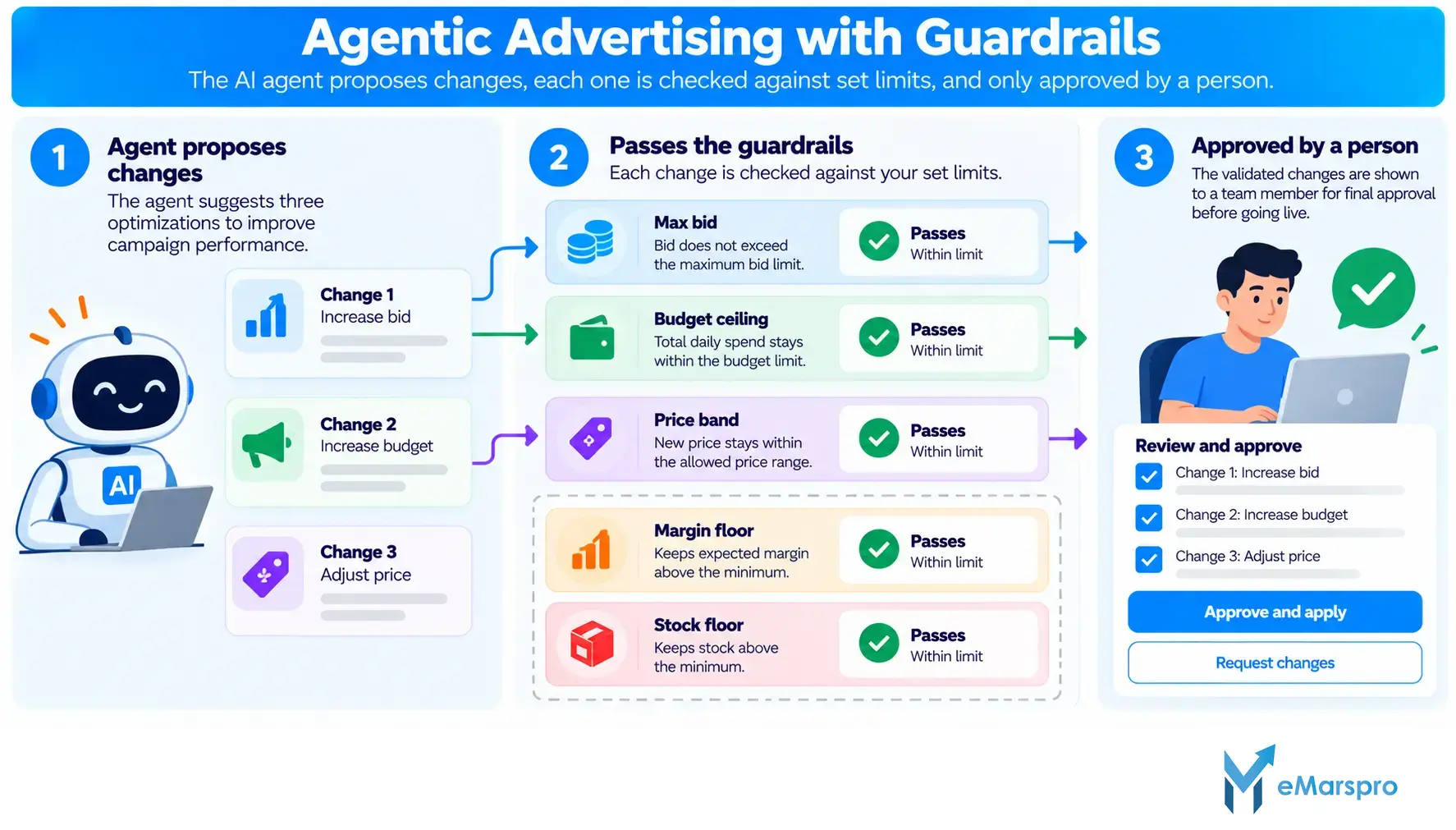
What we are doing now: the five limits every account carries (a maximum bid, a budget ceiling, a price band, a margin floor, a stock floor) before any agent runs.
Bet 5: listings get written for machines as much as for shoppers
Every marketplace now scores or drafts the listing with a model. Walmart’s listing quality score weighs content, price and shipping. Etsy is testing a listing form that suggests titles, tags and attributes. eBay expanded its magical listing tool.
By Amazon’s count at Accelerate, more than 350 million customers used Alexa for Shopping in the past year, and an assistant that answers a shopper reads attributes, not adjectives.
Our bet: in 2027 a listing wins on complete, structured, true attributes, the same facts an agent reads to recommend it and a shopper reads to trust it. Keyword stuffing is already a losing move; incomplete attributes become one.
What we are doing now: an attribute audit on every listing we manage, before any copy rewrite. The AI tools we use for the drafts are in the tools post.
What we are not betting on
We are not betting that agents replace the account manager, that any marketplace’s fees fall, or that a new marketplace matters more than the five above in 2027. We are not betting on any figure we cannot source.
Each of the five is a change in how we work, and each will be judged on the accounts, not on the forecast.
Frequently Asked Questions
In our view, the biggest change is who does the routine work. Amazon’s Seller Assistant now acts inside the account within limits the seller sets, Amazon Ads Agent proposes campaign changes for approval, and outside AI tools can reach Seller Central data through Amazon’s plugin. The seller’s job shifts from making changes to setting the limits and reading the log.
They will propose and, inside guardrails, execute routine changes: restocks, price moves, bid adjustments, listing drafts. Amazon’s own design keeps a person approving actions and logs every one. The accounts that do well will be the ones with a written policy for what the agent may touch, which is the subject of our Seller Assistant post.
Add the one whose buyers already want the product, tested through the console you already run. Amazon’s multichannel tools now bring eBay, Walmart, TikTok and Shopify orders into Seller Central, which makes a test cheap. Walmart reported marketplace net sales growth above 50% in its second quarter; TikTok Shop runs Black Friday for three weeks. Both are planned channels.
The bets, in one line each
Agents do the routine work and the seller writes the policy. Operations consolidate into one console and fulfillment decides outcomes. TikTok Shop gets a budget line. Advertising becomes approvals and guardrails. Listings are written for machines too.
If you want a team that is already running accounts on those five assumptions across Amazon, Walmart, eBay, Etsy and TikTok Shop that is what we do.