

If your Walmart results have stalled, the reason is usually not the platform. It is that Walmart rewards a specific weekly routine, and most sellers run it partially or not at all. This post lays out that routine, what Walmart takes, what outside help costs in the open market, and how to decide who should do the work.
Start with what Walmart itself charges
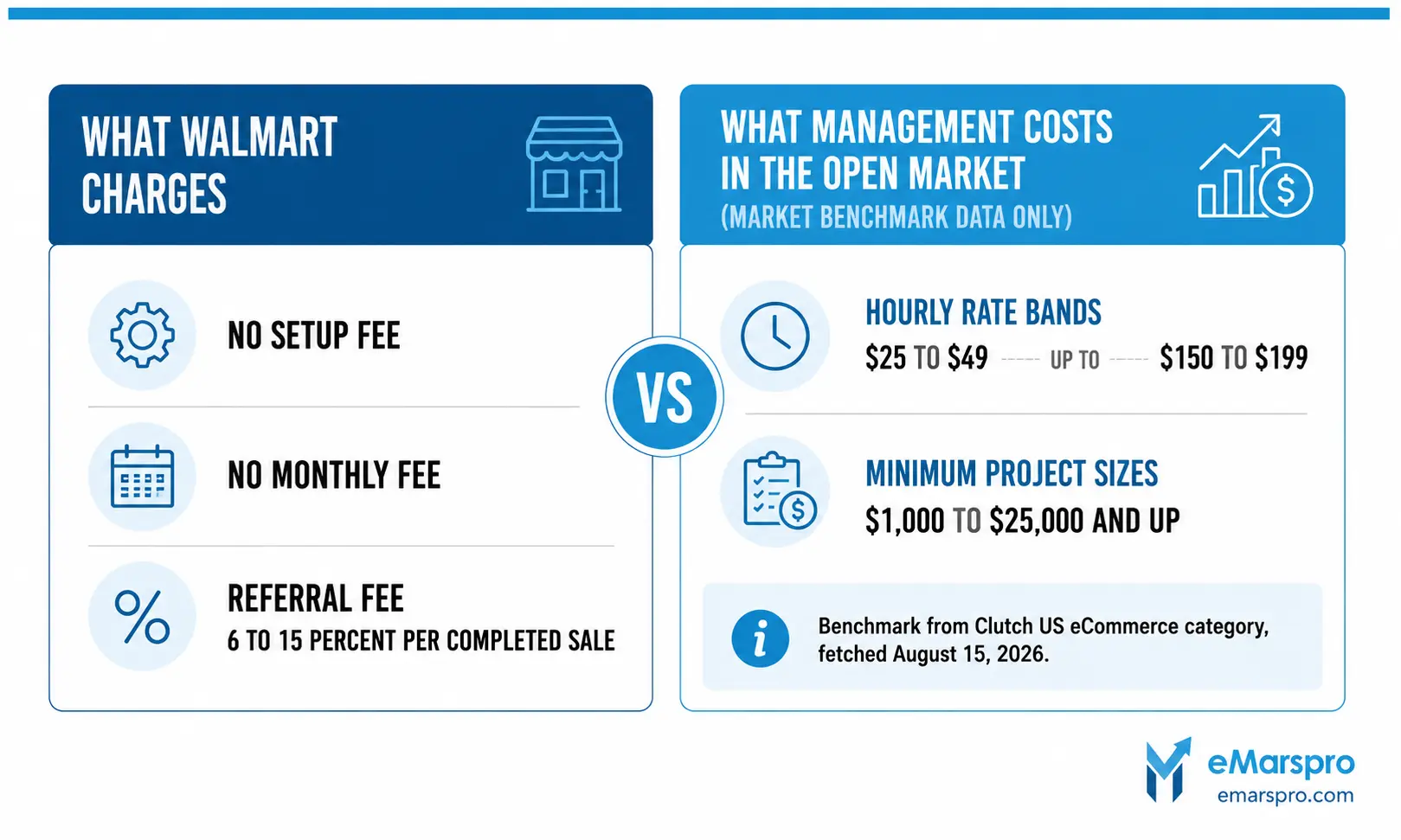
Walmart’s marketplace economics are unusually clean, and the numbers below were verified at the source on August 15, 2026.
- No setup fee, no monthly subscription, no hidden fees for sellers. Walmart’s own wording: “no setup, monthly, or hidden fees.”
- A referral fee is deducted from each completed sale. Rates vary by category and total sales price and range from 6 to 15 percent.
- Walmart Fulfillment Services (WFS) is optional and adds fulfillment and storage charges based on your items; check Walmart’s published WFS rate card before enrolling.
That structure matters for budgeting: your platform cost scales with sales, so every other dollar you spend, tools or people, is the discretionary part.
The actual work, week to week
“Management” sounds abstract until you list what a competent operator touches every week. Five workstreams cover it.
1. Listings and the Listing Quality dashboard
Walmart scores your content, offer, and post-purchase quality in Seller Center’s Listing Quality dashboard, and that score influences visibility. The weekly job: work the dashboard’s issue list, fix attribute gaps, upgrade titles and images, and reclaim items flagged for content defects.
Set a floor for your Listing Quality score and clear new flags weekly. Drift here quietly bleeds traffic.
2. Pricing and the Buy Box
Walmart is aggressive about price integrity: win the Buy Box with competitive pricing, and avoid being delisted for prices above your own price elsewhere. Weekly work means repricing against competitors, watching for unpublished items, and keeping your Walmart price aligned with your other channels.
3. WFS and inventory
For WFS items, the weekly rhythm is forecasting, replenishment shipments, stranded inventory checks, and storage cost review. Out of stock on Walmart is doubly expensive: you lose the sale and the ranking momentum you paid to build.
4. Walmart Connect advertising
Walmart Connect runs auction-based Sponsored Search and display placements. Weekly: search term reviews, bid and budget moves, negative targeting, and testing new campaign structures against your margin targets, not vanity ROAS.
5. The eight seller performance standards
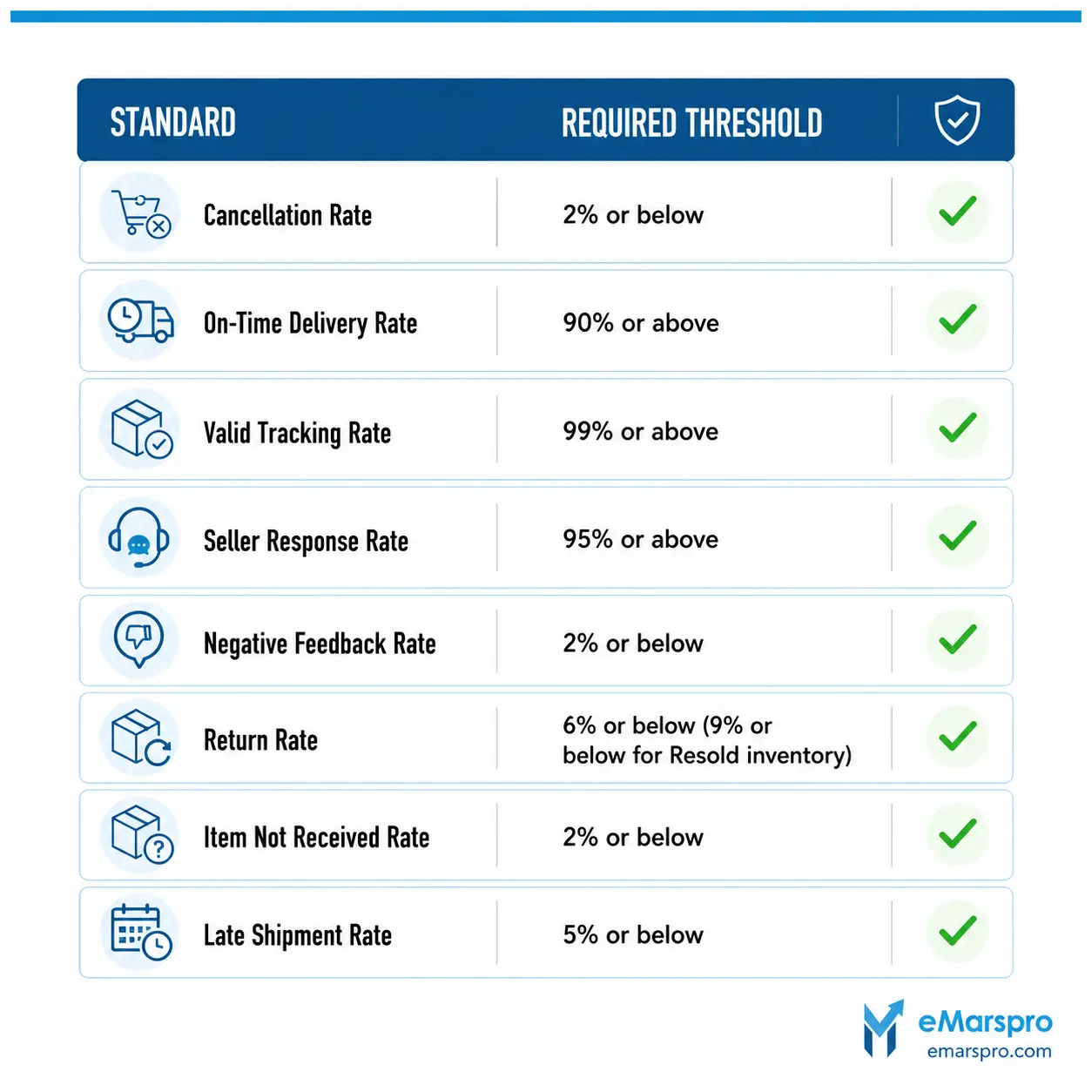
Walmart publishes eight standards every seller must hold, verified August 15, 2026 on Walmart’s Marketplace Learn seller performance standards page.
| Standard | Required threshold |
|---|---|
| Cancellation Rate | 2% or below |
| On-Time Delivery Rate | 90% or above |
| Valid Tracking Rate | 99% or above |
| Seller Response Rate | 95% or above |
| Negative Feedback Rate | 2% or below |
| Return Rate | 6% or below (9% or below for Resold inventory) |
| Item Not Received Rate | 2% or below |
| Late Shipment Rate | 5% or below |
The weekly job is monitoring all eight, root-causing any drift, and fixing the operational source before Walmart’s review process fixes it for you. Sustained misses put selling privileges at risk.
What the management work costs in the open market
There is no neutral public price list specific to Walmart-only management, so refuse any “industry standard Walmart rate” pitch.
The closest verifiable benchmark is the broader US eCommerce category on Clutch, fetched August 15, 2026 (source linked above): 1,161 US companies, advertised hourly rates from the $25 to $49 band up to $150 to $199, minimum project sizes from $1,000 to $25,000 and up, and typical engagements most often in the $10,000 to $49,000 range.
What moves a Walmart quote inside those bands is scope: catalog size, WFS versus seller-fulfilled mix, Connect ad spend, and whether Walmart is standalone or one channel in a multichannel program like full eCommerce management. Whatever you buy, insist that deliverables, hours, and response times are set in your SOW.
DIY or managed: score yourself honestly
Answer yes or no to six questions.
- Does someone check the Listing Quality dashboard and performance metrics every week now?
- Can you reprice across channels without breaking Walmart’s price rules?
- Is WFS replenishment forecast from data rather than gut feel?
- Does Connect spend get a search term review at least weekly?
- Are all eight performance standards green this month?
- Do you have hours left after Amazon to do all of the above next quarter?
Five or six yeses: stay DIY and keep your routine. Three or four: fix the gaps in-house or buy targeted help for the weak workstreams. Zero to two: the account is running you, and a managed program, in-house hire or outside team, will likely pay for itself in prevented losses alone.
Sellers coming from Amazon usually underestimate the overlap: if you already run a disciplined Amazon account operation, about two thirds of the routine transfers, and the Walmart-specific third (Listing Quality, price integrity, WFS quirks, the 8 standards) is learnable or hirable.
Frequently Asked Questions
Walmart charges no setup, monthly, or hidden fees for sellers. It deducts a referral fee from each completed sale that varies by category and total sales price and ranges from 6 to 15 percent, verified August 15, 2026 at marketplace.walmart.com. Optional WFS fulfillment and storage fees are extra.
Five weekly workstreams: listing quality work in the Listing Quality dashboard, pricing and Buy Box protection, WFS inventory and replenishment, Walmart Connect advertising, and monitoring the eight seller performance standards. Anything less is partial management.
Walmart tracks eight published metrics, including a 2 percent cap on cancellations and a 90 percent floor on on-time delivery. Sustained misses trigger review and can lead to items being unpublished or selling privileges being suspended, so treat the standards as weekly operating limits, not quarterly trivia.
They are similar models: you ship inventory to the platform’s network and it handles storage, delivery, and returns. Fee tables, prep rules, and capacity mechanics differ, so items profitable in FBA are not automatically profitable in WFS. Run the numbers per SKU before enrolling.
Running Partial Walmart Management?
Listing quality, pricing and Buy Box, WFS inventory, Connect ads, and the eight performance standards all need a weekly routine. We’ll check where yours is falling short and what it’s costing you.