

Opening an Amazon store can cost as little as $0.99 per item sold on the Individual plan, or $39.99 a month on Professional. The real budget is bigger: referral fees on every sale, fulfillment costs if Amazon ships for you, and the startup lines most guides skip, like inventory and creative.
Here is the verified 2026 fee picture, plus an honest budget framework with no made-up numbers.
One clarification first, because “Amazon store” means two things: the SELLER ACCOUNT you are paying for (this guide), and the branded storefront pages, which are free to build once you have Brand Registry.
Amazon’s Fees: The Verified 2026 Numbers
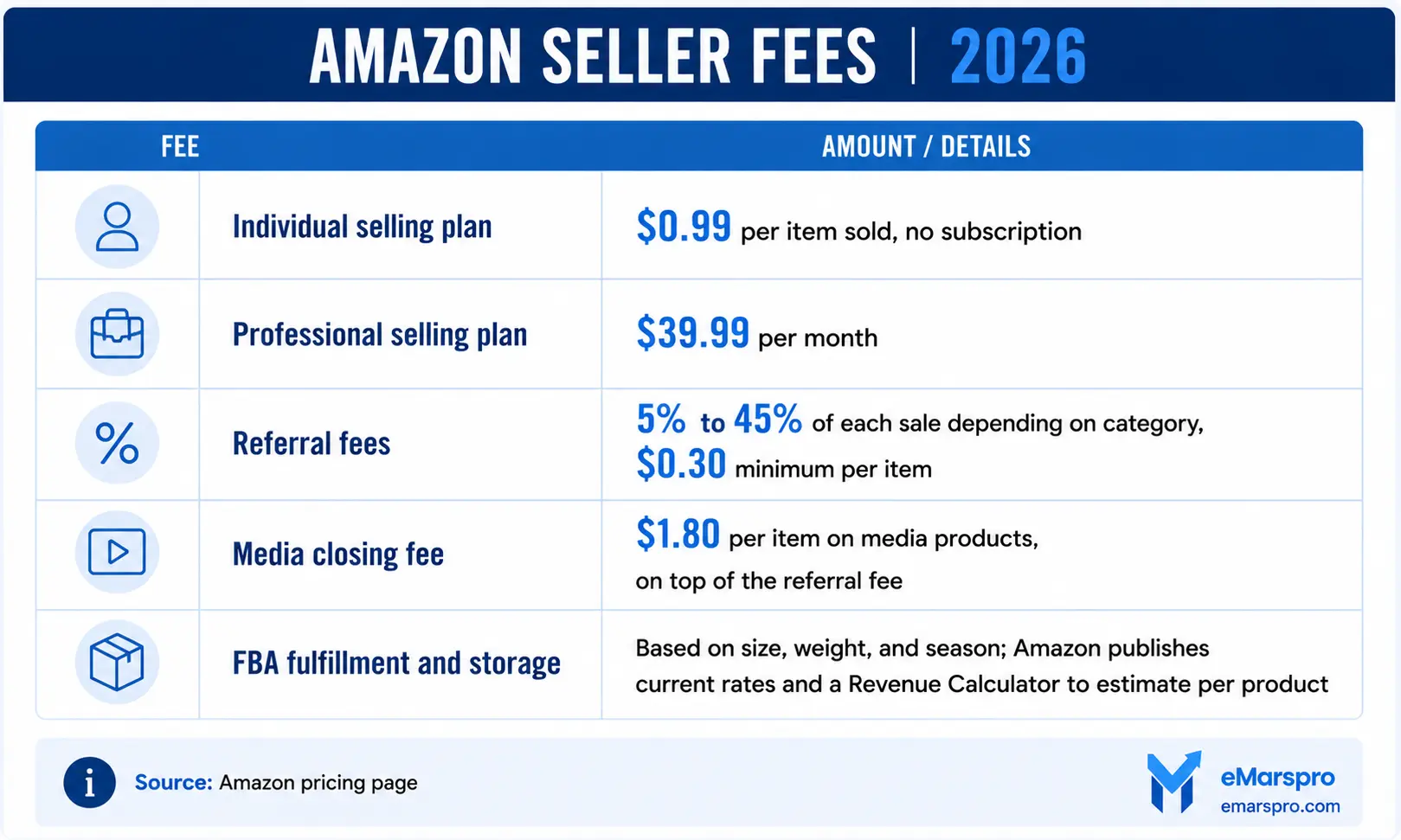
Every figure in this table comes from Amazon’s own pricing page:
| Fee | Amount |
|---|---|
| Individual selling plan | $0.99 per item sold, no subscription |
| Professional selling plan | $39.99 per month |
| Referral fees | 5% to 45% of each sale depending on category, $0.30 minimum per item |
| Media closing fee | $1.80 per item on media products, on top of the referral fee |
| FBA fulfillment and storage | Based on size, weight, and season; Amazon publishes current rates and a Revenue Calculator to estimate per product |
Two practical notes:
- Past roughly 40 sales a month, Professional costs less than the per-item fees would
- FBA fees are where budgets quietly break; the levers to control them are in our guide to reducing Amazon FBA fees
The Startup Costs Beyond Amazon’s Fees
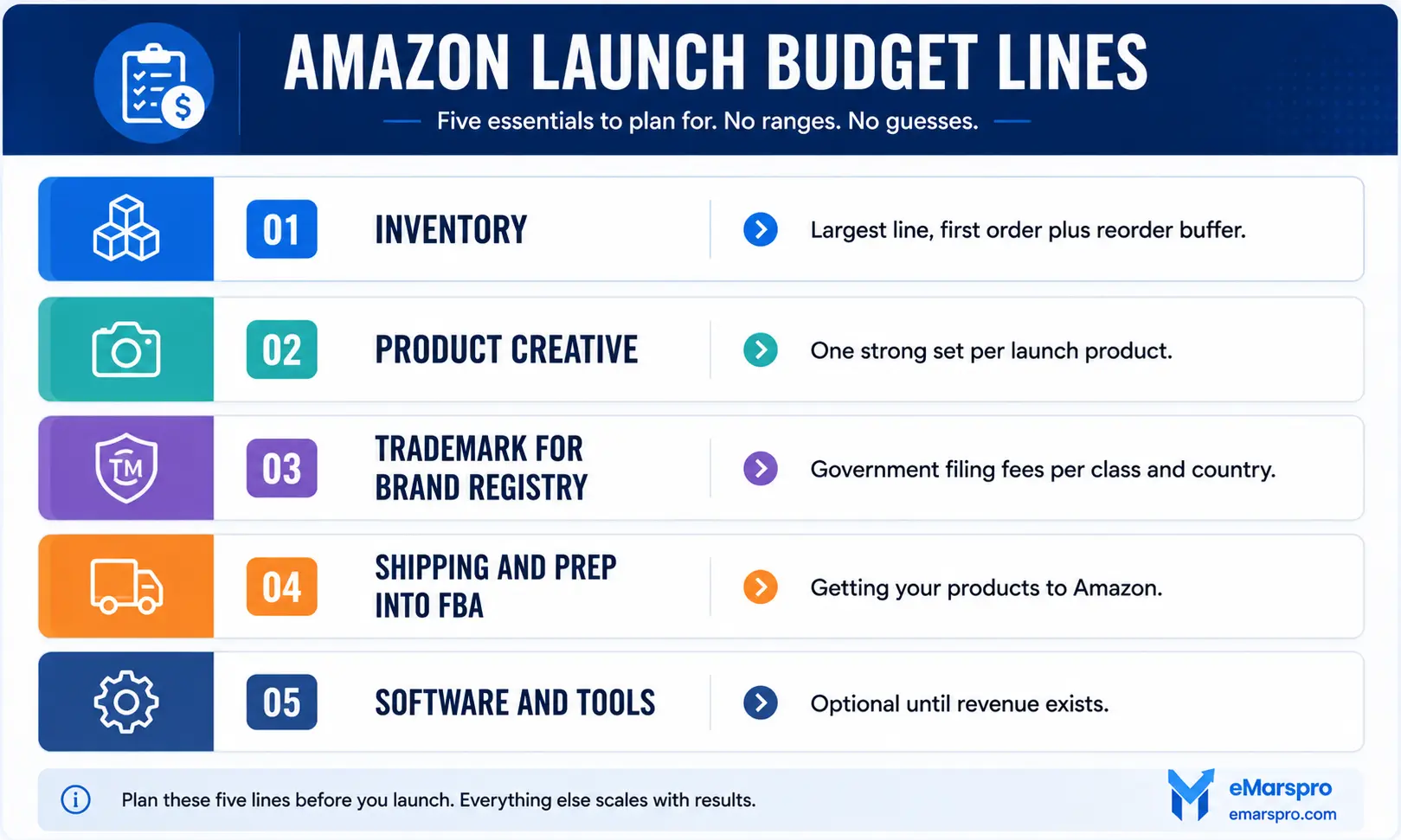
These vary too much by product and model for honest dollar ranges, so budget them as named lines instead of trusting a blog’s guesses:
- Inventory: your largest line by far; first purchase order plus a reorder buffer
- Product creative: photography and any video; one strong set per launch product beats mediocre sets across many
- Trademark, if you want Brand Registry: government filing fees apply per class and country; check current USPTO rates before budgeting
- Shipping and prep into FBA: freight, labeling, and prep for whatever you send in
- Software and tools: optional at the start; most research tools can wait until revenue exists
One 2026 saver: Amazon’s free AI listing tools generate titles, bullets, and content from a product URL or image, which pushes paid copywriting further down the priority list.
A Realistic First Budget in 3 Questions
- What does ONE unit cost landed? Product + freight + prep, at the door of an Amazon warehouse
- What will Amazon take per sale? Referral percentage + fulfillment estimate from the Revenue Calculator
- How many units prove the product? Enough stock to stay in-stock through the test, because stockouts reset momentum
If the math per unit works AFTER Amazon’s cut, scale is a repeat. If it only works before fees, no volume will save it.
Where New Sellers Overspend
- Tools before revenue: subscriptions stack fast and most duplicate what Seller Central shows free
- Creative before validation: full brand shoots for products that have not sold a unit
- Ads before listings are ready: paid traffic to a weak listing buys data you could have had free
- Ignoring the fee preview: per-ASIN fee previews catch size-tier surprises before they eat a quarter’s margin
Frequently Asked Questions
Creating the account costs nothing upfront on the Individual plan; you pay $0.99 per item when something sells. The Professional plan is $39.99 per month. Referral fees apply to every sale on both plans.
$39.99 on the Professional plan, or no subscription on Individual with $0.99 per item sold. Fulfillment, storage, and advertising are additional and depend on your products and choices.
A percentage of each sale that varies by category, from 5% to 45%, with a $0.30 minimum per item. Media products add a $1.80 closing fee. Current rates by category are on Amazon’s pricing page.
There is no universal number: enough units to stay in stock through your first real demand test. Start narrow with one or two products and let the math per unit, after Amazon’s fees, decide when to scale.
Know Your Numbers Before Amazon Does
Most sellers discover their real costs three months in, on a settlement report. The cheaper way is knowing them before launch, or if the account is already running, finding where fees are leaking. Our Amazon account management team starts every engagement with a free 48-hour audit that includes exactly that fee review.