

Most sellers run their own Amazon account right up until the account quietly starts running them. The shift rarely announces itself; it shows up as flat sales, skipped routines, and warnings you did not see coming.
Here are the five signs the DIY phase is over, what to try first for each, and what actually changes when you hand the account to a team.
1. Sales Are Flat No Matter What You Try
You have optimized listings, adjusted prices, and run ads, and the line stays flat.
- What it usually means: the bottleneck is structural (Buy Box share, catalog structure, fee leaks) rather than the tactic of the week
- Try first: run the 11-point account audit yourself; flat sales almost always show up in one of its checks
- The sign it’s time: you run the audit and cannot act on what it finds
2. Amazon’s Policies Feel Like a Second Job
Policy updates, compliance emails, and terms changes arrive faster than you can read them.
- What it usually means: nothing is wrong YET; unread policy changes become violations on a delay
- Try first: a monthly 30-minute policy review from the Seller Central news feed
- The sign it’s time: you learn about policy changes from warnings instead of from reading
3. Daily Operations Are Eating the Business
Messages, orders, inventory, repricing: the routine consumes the hours you meant to spend growing.
- What it usually means: the account has scaled past one person’s calendar, which is a success problem
- Try first: the daily and weekly management routine; structure recovers real hours
- The sign it’s time: the routine exists and still does not fit in your week
4. You Want to Scale and Do Not Know the Next Move
More products, new marketplaces, bigger inventory bets: every option feels like a coin flip.
- What it usually means: you have outgrown intuition; scaling decisions need forecasting and unit economics
- Try first: write the numbers down per option (landed cost, fees, realistic velocity) and let the math eliminate options
- The sign it’s time: the math says grow and you cannot execute the growth alongside the daily load
5. Account Health Warnings Keep Appearing
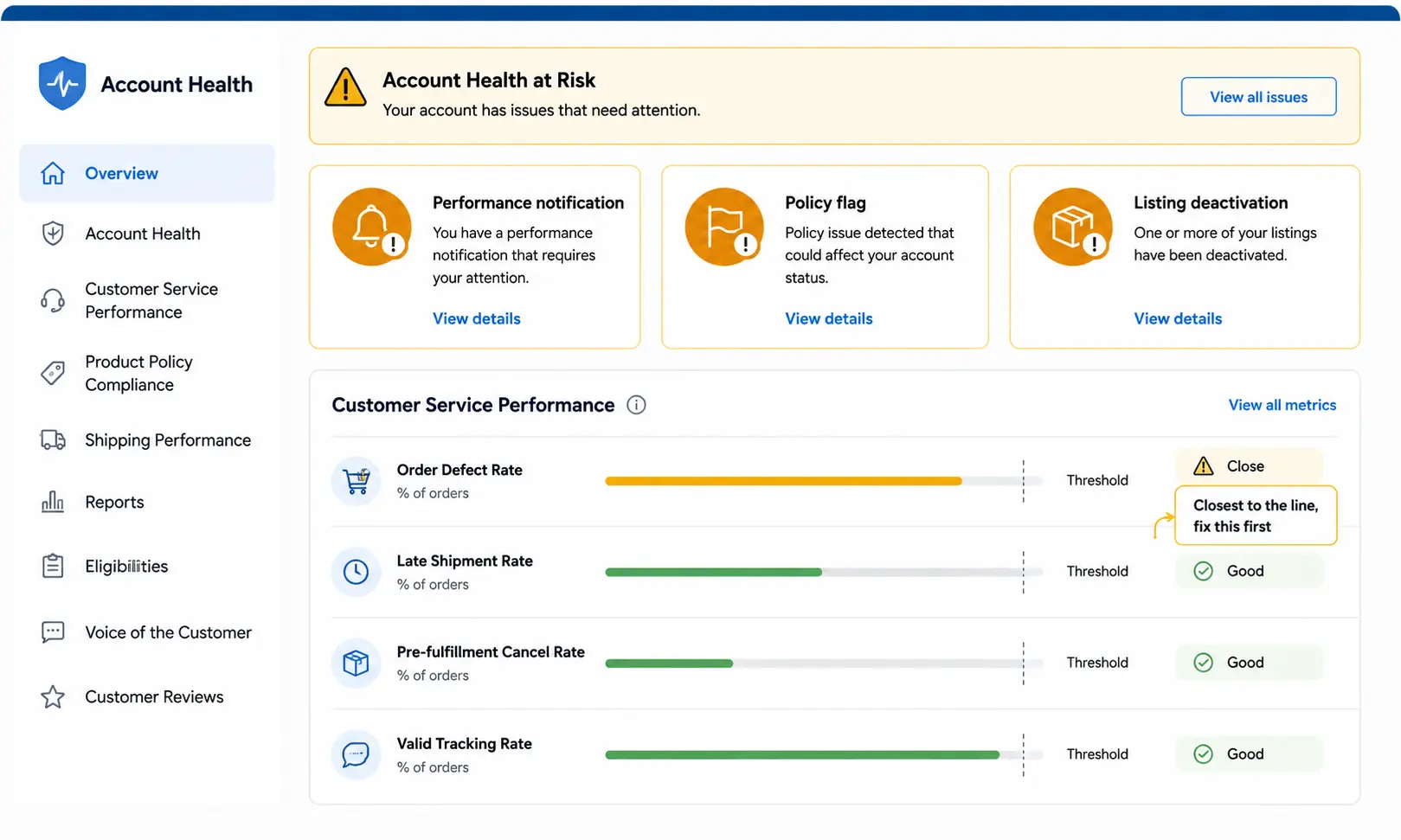
Performance notifications, policy flags, listing deactivations: the dashboard is turning yellow.
- What it usually means: the metrics Amazon judges you on are drifting; Amazon’s thresholds are hard lines, not suggestions
- Try first: fix the single metric closest to its threshold before anything else
- The sign it’s time: warnings recur after you fix them, because the cause is the workload, not the incident
What Actually Changes When You Hand It Over
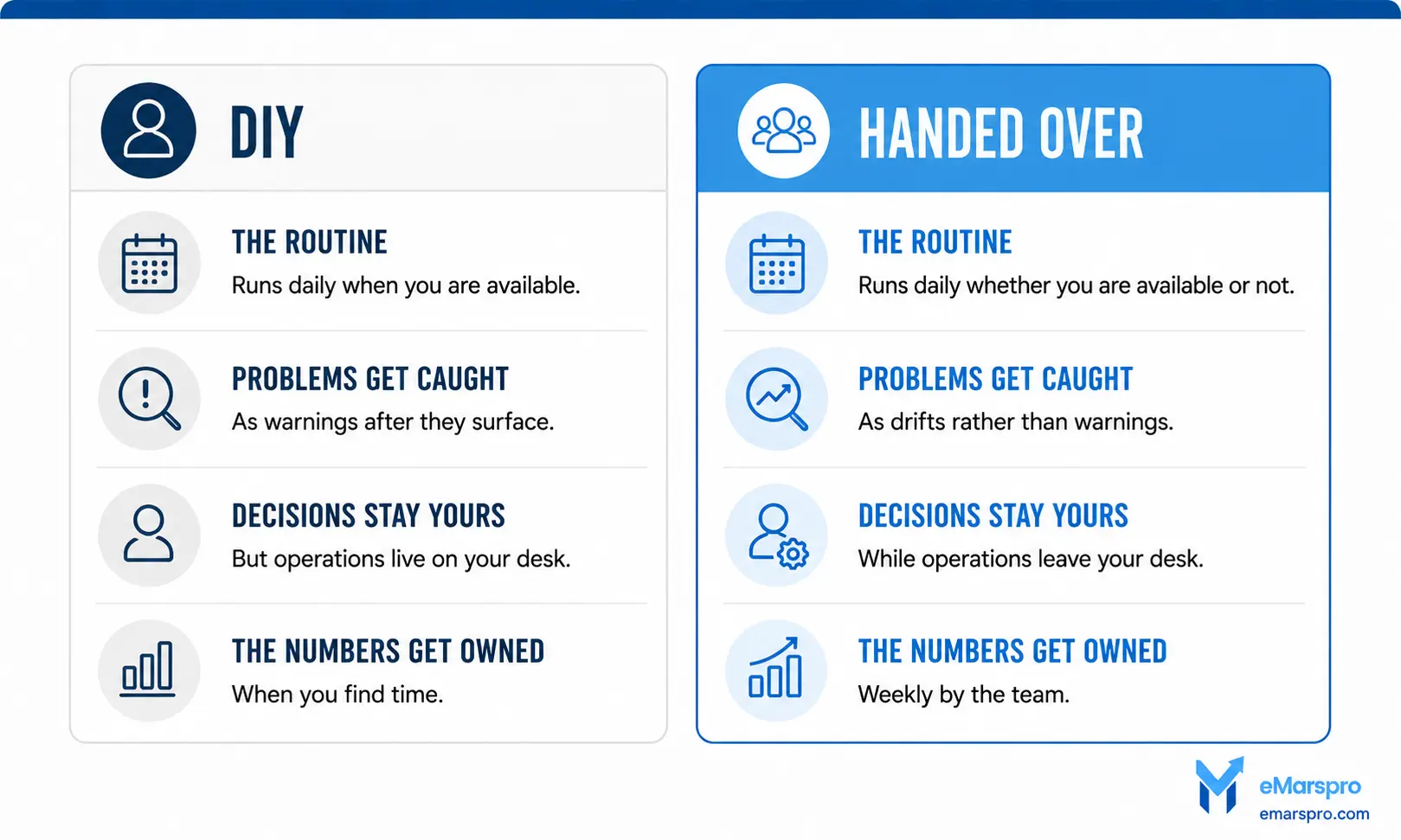
- The routine runs daily whether you are available or not: health checks, messages, inventory, pricing
- Problems get caught as drifts, not as warnings: that is the whole difference between managed and reactive
- You keep the decisions, lose the operations: strategy stays yours; execution stops depending on your calendar
- The numbers get owned: someone is accountable for metrics, fees, and reimbursements every week
That is the working definition of Amazon account management done properly: not a tool, a team running the checklist.
Frequently Asked Questions
When the routines exist and still do not fit your week, when health warnings recur after fixes, or when the account passes roughly $250k a year and growth decisions are stalling behind daily operations.
Typically the daily and weekly operating routine: account health monitoring, listings, inventory, pricing, customer messages, and advertising oversight. Exact scope varies by provider and is set in your agreement.
Often, yes: start with a structured audit and a daily 15-minute routine. The five signs above are about capacity, not capability; the account outgrows one person’s hours before it outgrows their skills.
Run the self-audit honestly. If the findings list is long and your available hours are short, the account is telling you which sign you are on.
The Account Does Not Wait
Every sign above gets more expensive the longer it runs: flat quarters compound, warnings escalate, and stranded hours never come back. If two or more signs feel familiar, our Amazon account management team starts with a free 48-hour audit that will tell you exactly what a team would take off your desk.