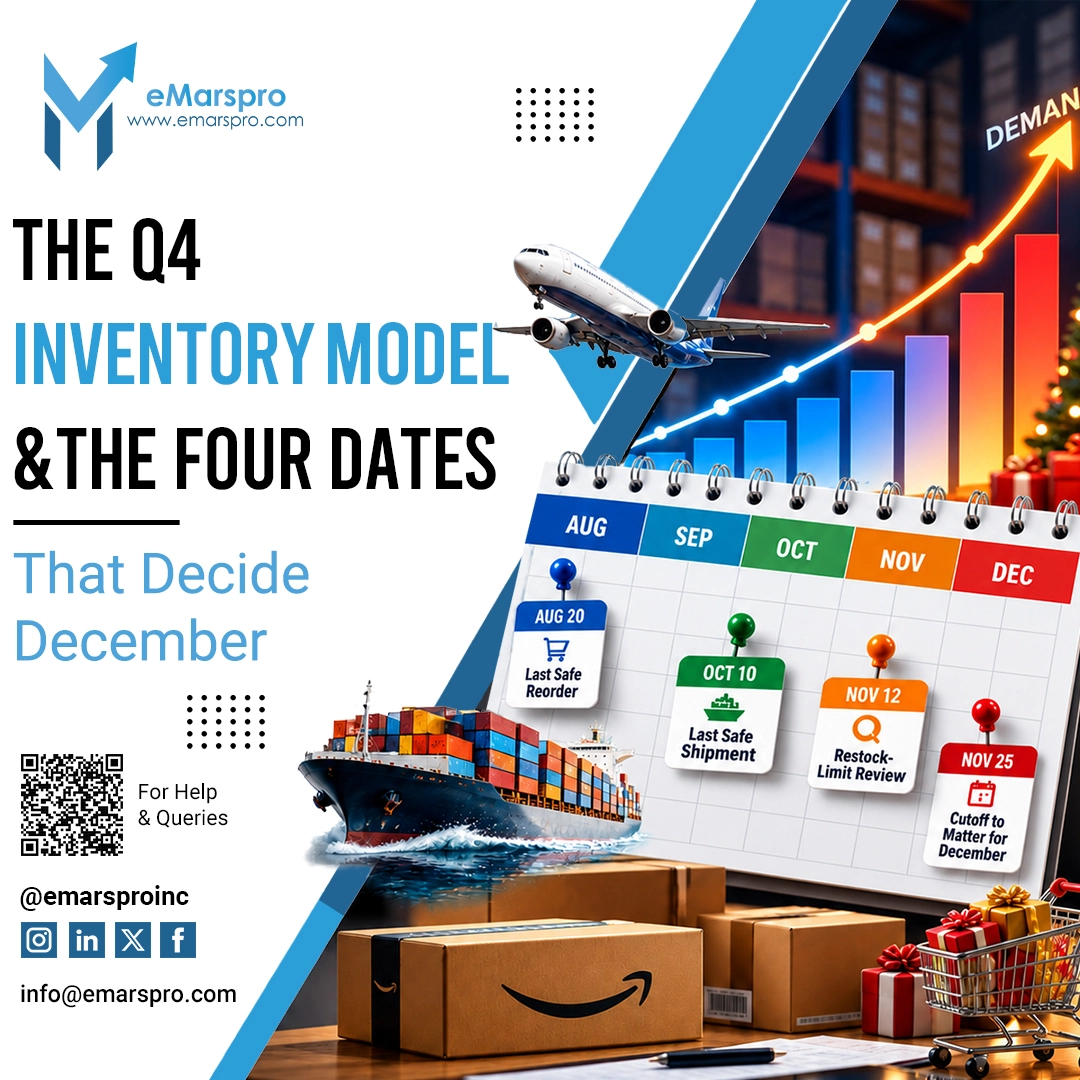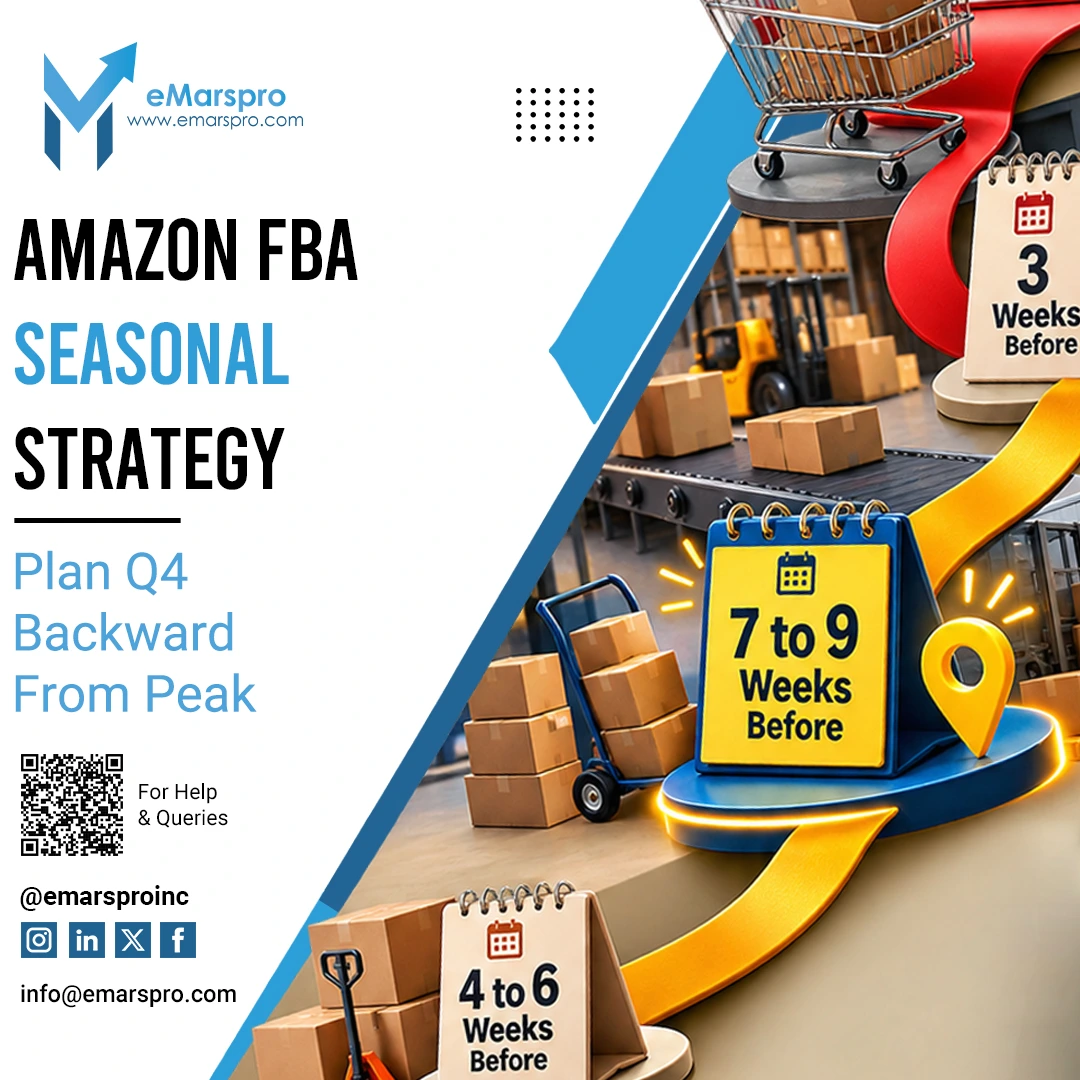

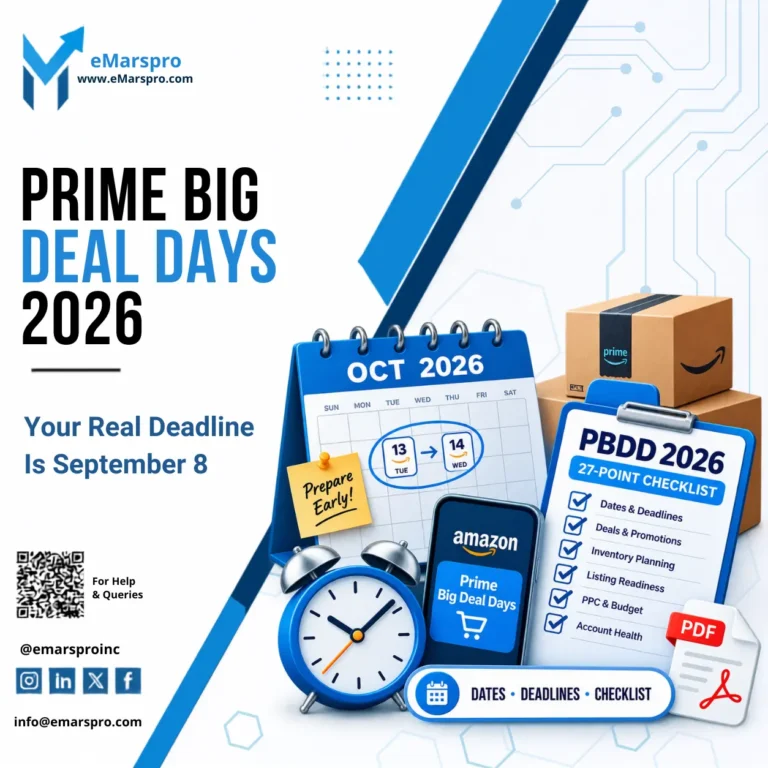
| Amazon has not announced Prime Big Deal Days 2026 dates. It has said only that the event returns at the same time as last year, when it ran October 7 to 8, 2025. What Amazon has published are the seller deadlines. Deal submissions close September 8. FBA inventory using Amazon optimized shipment splits has to be checked in by September 16. Those two dates, not the event date, are what your next four weeks are built around. |
What Amazon has actually said about the 2026 dates
Amazon’s own wording is this: Prime Big Deal Days returns at the same time as last year, followed by Black Friday Week and Cyber Monday.
Last year that was October 7 to 8.
When EcommerceBytes reported on the holiday deal submission windows, it put October 6 to 7 to Amazon directly. Amazon said it had not made any announcements about the event this year. So there is no confirmed date, and anyone publishing one is guessing.
Here is our read, clearly labelled as a read and not a fact. The event has opened on a Tuesday for three years running: October 10 in 2023, October 8 in 2024, October 7 in 2025. The Tuesday in the same window this year is October 6.
That is where we would put our money. It is not where we would put our inventory plan, because the inventory plan does not depend on it.
The three deadlines that already have dates
| Deadline | Date | What it actually controls |
| Early submission incentive | August 5, 2026 | Passed. A $50 saving for submitting PBDD deals early. Gone, so stop planning around it |
| PBDD deal submissions close | September 8, 2026 | Whether you have a deal in the event at all |
| FBA inventory cutoff | September 16, 2026 | Whether the units are physically there to sell |
| Black Friday submissions close | October 20, 2026 | The next event, planned off the same forecast |
| Black Friday FBA cutoff | October 28, 2026 | Same inventory decision, six weeks later |
| Holiday peak fulfillment fees | Oct 15, 2026 to Jan 14, 2027 | Your Q4 margin, whether you promote or not |
The September 16 date is the inbound cutoff for Amazon optimized shipment splits, which is the option most sellers are using. It was first reported by ppc.land, and it is the operative one for the majority of accounts. If you use minimal splits or AWD, your cutoff differs, so check the inbound guidance on your own account.
Why planning to the event date puts you a month behind
If the event lands on October 6, that is roughly eight weeks away. Eight weeks feels comfortable. It is also the wrong number to be working from.
Submissions close September 8. That is four weeks. Inventory has to be checked in by September 16, which is five.
| The date everyone is waiting for is the one that matters least to your planning. |
What happens if you miss September 8
You lose the deal badge and the deals page placement. You do not lose the event.
• Coupons remain available and still show a green flash on the search results page
• Prime Exclusive Discounts remain available and are visible to the Prime audience the event brings
• Subscribe and Save keeps working on consumable categories
• Advertising is unaffected, and event traffic is the reason to have planned it
The honest version: those tools work, they just do not put you on the page shoppers browse. Plan around them rather than writing the event off.
Deadline one: deal submissions close September 8
The window opened on July 8 and closes on September 8. Four things decide whether a submission is worth making.
• Eligibility per ASIN per promotion type. Lightning Deals, Best Deals, Prime Exclusive Discounts, coupons and Subscribe and Save all have different eligibility rules, different fees and different submission paths. Checking one does not clear the others
• The reference price rule. The promotional price has to beat the trailing lowest price to qualify, so a discount cycle you ran in August can disqualify the deal you want in October
• Deal economics after everything. Discount, referral fee, fulfillment cost, peak fee surcharge and the advertising you will run behind it. Not just the discount
• A minimum acceptable contribution margin per promoted ASIN, set before submission rather than argued about afterwards
The mistake we see most often is submitting everything that is eligible. A high traffic event does not make every ASIN a good promotion candidate. Prioritise the products where inventory, margin, listing quality and advertising support can all work together, and leave the rest at full price to absorb the traffic.
Deadline two: FBA inventory must land by September 16
Work backwards from September 16, not forwards from today. The arithmetic is simple and most sellers skip it.
| Cover days = units on hand divided by expected event daily velocity. Set the target at the event window plus your restock lead time. If you cannot cover both, you are choosing between selling out on day one and having stock for Black Friday, and that is a decision to make in August rather than discover in October. |
Two things block inventory plans more often than the date does. Restock limits and storage capacity, which cap what you can send regardless of what you want to send. And reserved inventory, which looks like coverage in a report and is not available to sell.
This is the point where Amazon account management and advertising stop being separate jobs. An ASIN carrying stock risk should be having its ad spend reduced, not increased, whatever the event calendar says.
Deadline three: the Black Friday overlap you plan at the same time
Black Friday and Cyber Monday deal submissions run to October 20, and their FBA cutoff is October 28. Those dates sit close enough to the October event that one forecast should cover both.
Sellers who plan them separately end up shipping twice, paying peak fulfillment fees twice, and discovering in November that the units they need are the units they sold in October. If you run eCommerce management across marketplaces, the same applies with Walmart and TikTok Shop timelines layered on top.
What last October actually looked like
Six accounts, measured across Prime Big Deal Days 2025 against the same event in 2024. Same event, year over year, so the comparison is our work rather than the existence of the event. All anonymized at the clients’ request.
| Category | PBDD revenue | Revenue | Units | Also improved |
| Beauty and personal care | $184K to $327K | plus 78% | plus 71% | ROAS plus 34% |
| Home and kitchen | $142K to $240K | plus 69% | plus 58% | Conversion rate plus 27% |
| Health and household | $96K to $188K | plus 96% | plus 84% | ROAS plus 41% |
| Electronics | $215K to $346K | plus 61% | plus 47% | Ad sales plus 72% |
| Baby products | $128K to $229K | plus 79% | plus 68% | Conversion rate plus 31% |
| Sports and outdoors | $156K to $270K | plus 73% | plus 62% | ROAS plus 29% |
| All six combined | $921K to $1.6M | plus 74% |
The detail worth stopping on is not the growth rate. It is that revenue grew faster than units in every one of the six. Average selling price rose between about 4% and about 9% year over year, during a discount event, which is the opposite of what a discount event is supposed to do to your average order.
That is mix, not luck. Budget moved toward the ASINs that earned it, so a larger share of event volume landed on higher value products rather than on whatever happened to be cheapest. Across the hundreds of Amazon accounts we run, that is the difference between a busy event and a profitable one.
Six accounts is six accounts. This is not a portfolio average, and results depend on category, inventory position and the account structure you start from.
And the months we would rather not show you
Six wins in a row is not evidence. It is a brochure. So here is the other kind of month, from a household consumer brand we run outside the US.
This one is not event data. It is ordinary trading, and we are including it because the lesson applies directly to October.
| What moved | Change over two months | What it meant |
| Cost per click | plus 24% | The auction moved against us. Nothing we did caused it |
| Our ad spend | held flat, down 2% | We did not try to buy our way out |
| Ad sales | minus 26% | The same money bought a quarter less revenue |
| ROAS | 4.49x down to 3.42x, minus 24% | The number we would rather not publish |
We could have hidden that by only showing you the peak month. We could also have scaled spend hard into the rising auction, bought the volume back and reported a bigger sales number at a much worse rate.
| This is why the most common event plan is the wrong one. Almost every deal event plan we are shown starts with increase the budget. Prime Big Deal Days brings competitors into the same auction at the same time, which is exactly the condition above. If click costs rise faster than your conversion rate can absorb them, a bigger budget buys the same problem at a larger scale. Decide in advance which campaigns deserve more room and which signals will make you stop. |
What we do in the four weeks before a deal event
The sequence does not change much by account. What changes is where the time goes.
Weeks one and two: diagnose and fix structure
• A structural audit before a single bid changes. Where match types collide, which campaigns cap out before end of day, which ASINs absorb spend without converting, which placements actually convert
• One match type per campaign, so a bid means something on event day when there is no time to work out why a number moved
• Keywords and products segmented by performance tier, and budget moved out of what has stopped adding sales
Weeks three and four: prepare for the event specifically
• Inventory aware pacing. Advertising is reduced or paused on ASINs carrying stock risk, which protects both the spend and the organic rank you would lose in a stockout
• Budget allocated by priority ASIN and campaign role, rather than one blanket increase across the account
• A deal seeker negative pass, because event traffic brings bargain hunting that converts poorly and spends quickly
• Branded defence funded separately, so cheap protection of terms you already own frees budget to buy new customers
• Intraday budget checks scheduled at named times on event day. High intent campaigns capping out by mid morning is the most common and most expensive event day failure
More detail on how we structure accounts sits on our Amazon PPC management page.
The 29 point readiness checklist
Six phases. Work them in order, because later phases depend on decisions made in earlier ones.
Phase 1. Deal and ASIN selection
1. Choose the ASINs that are commercially worth supporting during the event
2. Confirm each selected ASIN is eligible for the promotion type you intend to use
3. Review deal economics after discount, fees, advertising and expected fulfillment costs
4. Check reference pricing and recent pricing history before finalising the promotional plan
5. Set a minimum acceptable contribution margin for each promoted ASIN
Phase 2. Inventory readiness
6. Forecast demand for participating SKUs using your own recent sales and event history
7. Review FBA available, inbound and reserved inventory for every priority SKU
8. Flag SKUs that could stock out before or during the event
9. Create an inbound plan with an internal buffer ahead of the September 16 cutoff
10. Document a fulfillment fallback for priority products where practical
Phase 3. Listing readiness
11. Audit titles, bullets and key product details for accuracy and buyer clarity
12. Review the image stack and make sure the primary buying questions are answered visually
13. Review A plus Content for outdated claims, weak comparisons or missing decision information
14. Check parent and child variation structure and confirm shoppers land on the intended options
15. Resolve suppressed, inactive or incomplete listings before event traffic arrives
Phase 4. Advertising readiness
16. Define the campaign structure you will use for event traffic before the event begins
17. Review recent search term performance and isolate proven high intent queries
18. Allocate budgets by priority ASIN and campaign role instead of one blanket increase
19. Set an event bidding approach with clear limits for inefficient spend
20. Prepare branded defence and relevant competitor or product targeting where it fits
Phase 5. Account and promotion QA
21. Confirm submitted promotions are still active and review any Amazon warnings or suppression notices
22. Check Seller Central for account health, catalog or policy issues that could disrupt priority ASINs
23. Review Featured Offer eligibility and current offer conditions on the products you plan to push
24. Assign an owner for event day checks across deals, inventory and advertising
Phase 6. Event and post event execution
25. Monitor inventory and sales velocity on priority SKUs throughout the event
26. Monitor advertising spend, traffic quality and budget exhaustion during the event
27. Check promotion status and customer facing pricing for unexpected changes
28. Capture event performance by ASIN, promotion and advertising segment
29. Turn the findings into the next Q4 plan for Black Friday, Cyber Monday and holiday demand
| Why the last three points matter more than they look. Prime Big Deal Days is not the end of Q4 planning. The event produces the cleanest demand, efficiency and velocity signals you will get before Black Friday. Capture them while they are fresh, because in six weeks you will be making the same decisions with worse information. |
What to do this week
One thing, and it takes about an hour.
Pull your top 20 ASINs by revenue. For each one, write down two numbers: units currently available, and the daily velocity you expect during the event. Divide the first by the second.
Any ASIN that does not cover the event window plus your restock lead time is either an inbound plan you start this week, or an ASIN you do not promote. There is no third option, and the September 16 cutoff decides which one you get.
| If you want a second pair of eyes on which of your ASINs are actually worth promoting this October, that is what our free Amazon analysis covers. We look at inventory position, deal economics and account structure and tell you where the risk is. No commitment attached. |
Frequently Asked Questions
No. As of August 2026 Amazon has said only that the event returns at the same time as last year, when it ran October 7 to 8, 2025. Amazon declined to confirm October 6 to 7 when asked directly. Plan against the published seller deadlines rather than an assumed event date.
September 8, 2026. The submission window opened on July 8. A separate early submission incentive closed on August 5 and is no longer available.
September 16, 2026 is the inbound cutoff for Amazon optimized shipment splits, which most sellers use. Minimal splits and AWD have different cutoffs, so confirm the guidance shown on your own account before booking shipments.
You lose the deal badge and placement on the deals page, but not the event. Coupons, Prime Exclusive Discounts, Subscribe and Save and advertising all remain available and all benefit from the traffic the event brings.
The mechanics are similar but the deadlines are entirely separate. Prime Day 2026 ran June 23 to 26 and its deadlines have passed. Prime Big Deal Days has its own submission window closing September 8 and its own inventory cutoff on September 16.