

| Amazon holiday fulfillment fees are active from October 15, 2026 to January 14, 2027, at an average of about 32 cents per unit above standard rates. On top of that sits the 3.5% fuel and logistics surcharge introduced in April 2026, which is still in effect. You will see headlines saying Amazon held Q4 fees flat and headlines saying Amazon raised them. Both are true, they are comparing different things, and the gap between them is where Q4 margins get lost. |
The fee headline is wrong in both directions
Here is what actually happened. Amazon set its 2026 holiday fulfillment fees at an average increase of about 32 cents per unit, which is the same peak surcharge it applied last season.
So a publication comparing this year to last year writes “fees held flat.” A publication comparing peak rates to standard rates writes “fees raised.” Neither headline is false and neither is useful, because your margin does not care about the comparison. It cares about the number you pay in November.
| Example unit | Standard rate | Holiday rate | Difference |
| Small standard, a phone case | $2.49 | $2.68 | plus $0.19, about 7.6% |
| Extra large, a 50 to 70lb TV | $48.57 | $51.38 | plus $2.81, about 5.8% |
Note which one hurts more. The percentage is larger on the small cheap unit, not the heavy expensive one. If your catalog is high volume and low price, the peak season surcharge is a bigger proportional hit than it is for someone shipping furniture.
The three layers actually hitting your Q4 margin
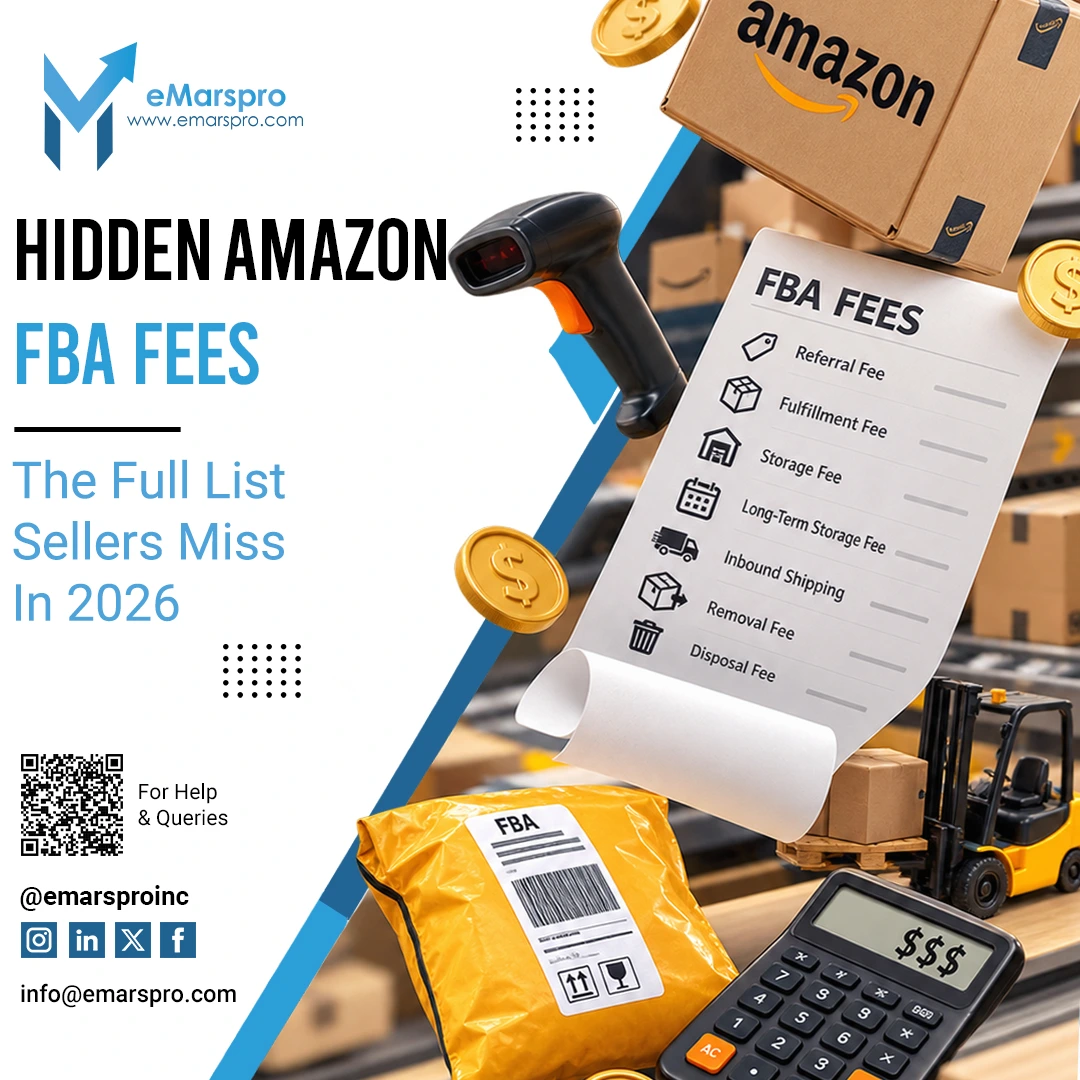
Most Q4 planning treats fulfillment as one number. In 2026 it is three, and they stack.
| Layer | What it is | When it applies | ||
| 1. Standard fulfillment fee | Your normal per unit rate by size tier | All year | ||
| 2. Holiday peak surcharge | About 32 cents per unit on average, more on larger tiers | October 15 to January 14, 2027 | ||
| 3. Fuel and logistics surcharge | 3.5%, introduced April 2026, in effect until further notice | All year, including on top of the peak surcharge | ||
| The practical consequence. An ASIN that clears a thin margin in September can be underwater in November without a single thing changing about the product, the price or the advertising. If you have not recalculated contribution margin using the October 15 rates, your Q4 plan is built on September numbers. That is the most common mistake we correct at this time of year. | ||||
What to budget
Two decisions, and most sellers only make the first.
Decision one: recalculate break even before you set the budget
Take your top 20 ASINs by revenue and rebuild contribution margin with the holiday rates and the surcharge included. You are looking for the products that cross from profitable to marginal. Those are not products to promote. Those are products to protect at full price while the traffic is free.
Decision two: do not treat “increase the budget” as the strategy
This is the one that costs real money, and we have the scar to prove it. In a household consumer account we run outside the US, cost per click rose 24% over two months. We held spend roughly flat. Sales still fell 26% and return on ad spend fell from 4.49x to 3.42x.
That was an ordinary trading period, not a peak event. Q4 pulls every competitor into the same auction at the same time, which is that condition amplified. If click costs rise faster than your conversion rate can absorb them, a larger budget buys the same problem at a larger scale.
Decide in advance which campaigns deserve more room, which search terms have earned aggressive support, and which signal makes you stop. That planning is the core of how we run Amazon PPC management through a peak quarter.
What to stock
The stocking decision in Q4 is not how much. It is which products, and the fee stack changes the answer.
• Products that stay comfortably profitable at holiday rates. Stock these deep, because a stockout here costs you the sale and the organic rank you spent the year building
• Products that go marginal at holiday rates. Stock to cover, not to promote. They will still sell on the traffic, and every promoted unit erodes the quarter
• Products that go negative. Consider whether they should be in FBA at all during the surcharge window. Merchant fulfilled or a paused listing can beat a loss making sale
That sorting is impossible if your catalog data is incomplete, because you cannot calculate a margin on a product whose size tier or weight is wrong in the record. If that describes your catalog, fix it first. We wrote up the process in our catalog management guide.
One more thing that catches people. Reserved inventory reads as coverage in a report and cannot be sold. Check available, inbound and reserved separately for every priority SKU, not the blended number.
What to launch, and what not to
The instinct is to launch into the biggest traffic of the year. Across the hundreds of Amazon accounts we run, that instinct is usually wrong, for three specific reasons.
| Why Q4 launches struggle | What to do instead |
| A new ASIN has no conversion history, so it enters the most expensive auction of the year with the weakest quality signals | Launch in the first half of September so the listing has data before the surcharge window and the auction inflation arrive together |
| Peak fees apply to a product that has not yet proven its margin | If the launch slips past October 15, hold it to January. The traffic is smaller and so is the cost of learning |
| Review velocity is slow relative to traffic, so the listing looks weak at exactly the moment it is most visible | Use Q4 to build the search term evidence for a January launch instead |
The exception is a variation or a bundle on an ASIN that already converts, because it inherits the parent’s history. That is a launch worth making in Q4. A genuinely new product is not. Either way the work starts with the search terms, which is what we covered in our Q4 keyword research post.
The dates that force the plan
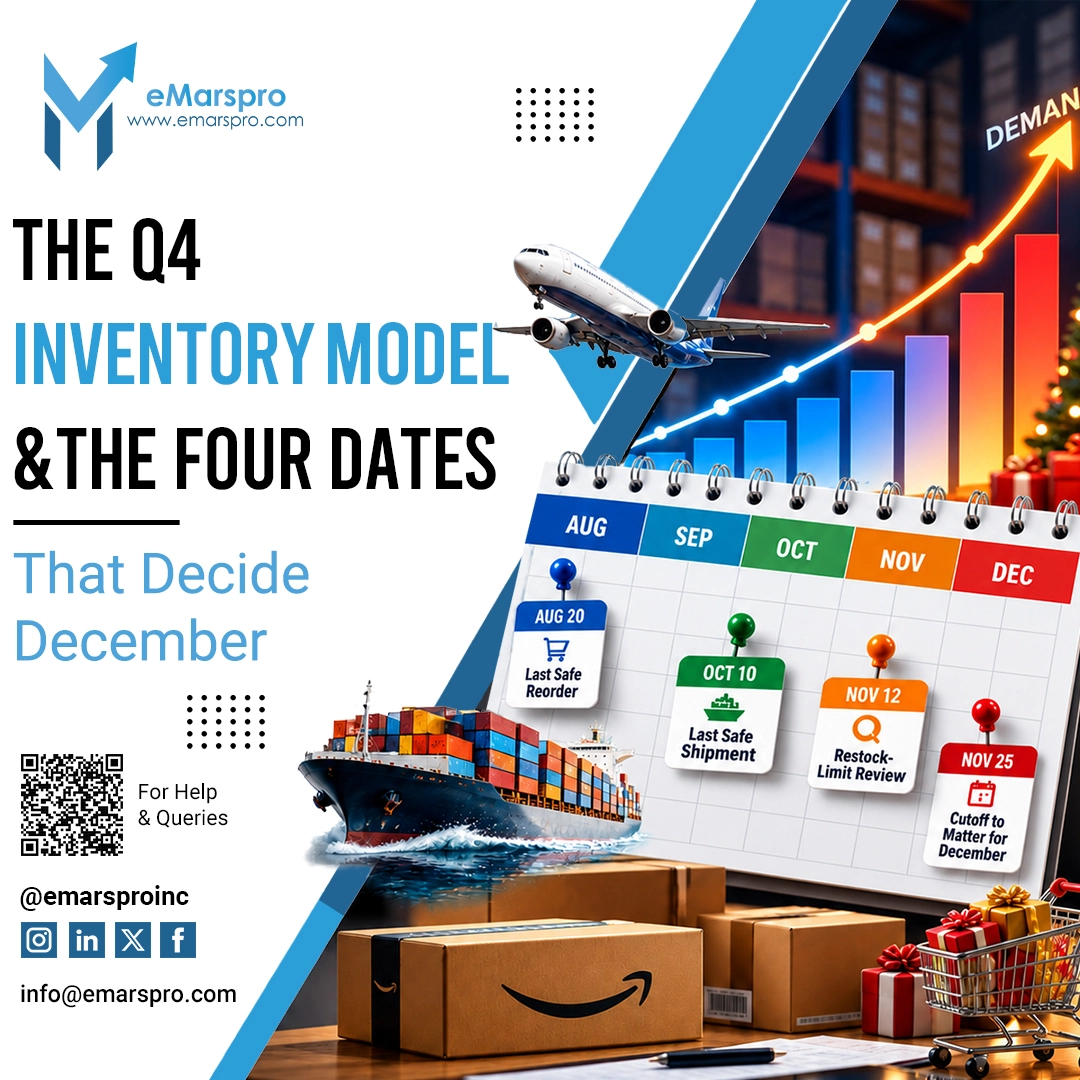
| Date | What it is |
| September 8, 2026 | Prime Big Deal Days deal submissions close |
| September 16, 2026 | FBA inbound cutoff for the October event, for Amazon optimized shipment splits |
| October 15, 2026 | Holiday fulfillment fees begin. Your margin changes on this date |
| October 20, 2026 | Black Friday and Cyber Monday deal submissions close |
| October 28, 2026 | FBA inbound cutoff for Black Friday and Cyber Monday |
| January 14, 2027 | Holiday fulfillment fees end |
The first two of those are the ones that decide whether you are in the October event at all, and we broke them down in full in our Prime Big Deal Days deadline guide, including the 29 point readiness checklist.
Those submission and inbound dates come from Amazon’s published holiday deal windows. Amazon has also advised bringing inventory in by October for Prime delivery speeds through Black Friday, with the exact cutoff depending on your inbound shipping plan, so confirm the guidance shown on your own account rather than working from a general date.
Read that list once more with the fee stack in mind. Everything you send in before October 15 is stored under the surcharge window anyway, but everything you sell after it carries the higher rate. Sending early protects delivery speed. It does not protect margin. Those are two separate problems and they need two separate decisions.
The part most guides skip: January
Almost every Amazon holiday selling guide stops at the sale. The quarter does not. Two things land after Christmas and both were decided in October.
Returns arrive when the peak fees are still running
Items bought as gifts come back in January, and the holiday fulfillment window does not close until January 14. So a return processed in the first two weeks of the year sits inside the same surcharge period that made the original sale expensive. You pay peak season economics on a unit that generated no revenue.
Which means return rate is a Q4 stocking criterion, not just a customer service metric. A product with a high return rate and a thin holiday margin is a worse Q4 candidate than its sales history suggests, because the December sale and the January return are one transaction on your P and L.
Your January organic rank was set in November
Sales velocity through peak season carries into the new year. An ASIN that stocks out in the first week of December loses more than the December revenue. It loses the ranking that would have carried it through a quiet January, at exactly the point when there is no seasonal traffic to rebuild it with.
That is the real argument for stocking depth on your proven winners rather than breadth across the catalog, and it is the reason we treat inventory coverage as an account management decision rather than a warehouse one.
What to do this week
One hour, one spreadsheet.
• List your top 20 ASINs by revenue with current contribution margin
• Add a second column recalculated at holiday fulfillment rates plus the 3.5% surcharge
• Sort by the difference. Anything that crosses from healthy to marginal moves out of your promotion plan and into your protect plan
• Anything that goes negative gets a decision about whether it should be in FBA between October 15 and January 14 at all
That single sheet decides your budget, your stock depth and your launch list at once, which is why it is worth doing before any of the three.
| If you would like a second opinion on which of your products stop working at holiday rates, that is part of what our free Amazon analysis covers. We look at margin by ASIN, inventory position and account structure and tell you where Q4 is most likely to cost you. No commitment attached. |
Frequently Asked Questions
Both answers you will read are technically right. The peak surcharge is about 32 cents per unit on average, which matches last season, so compared to 2025 it is flat. Compared to standard rates it is an increase. The number that matters is what you pay between October 15, 2026 and January 14, 2027.
They run from October 15, 2026 to January 14, 2027. The 3.5% fuel and logistics surcharge introduced in April 2026 applies on top and is in effect until further notice.
Usually not. A new ASIN enters the most expensive auction of the year with no conversion history and unproven margin at peak fee rates. Variations or bundles on an ASIN that already converts are the exception, because they inherit the parent listing’s history.
Start from break even at holiday fee rates rather than from last year’s budget. Q4 pulls every competitor into the same auction, so if click costs rise faster than conversion can absorb, a bigger budget buys the same problem at a larger scale. Decide in advance which signal makes you stop.
Recalculate contribution margin on your top 20 ASINs using holiday rates. Every other Q4 decision, budget, stock depth and launch list, falls out of that one calculation.
Which ASINs Go Underwater At Holiday Rates?
We’ll look at your margin by ASIN, inventory position, and account structure, and tell you where Q4 is most likely to cost you. No commitment attached.